Four excellent new songs (1780)
“ With tremendous loud claps of thunder, All things we made fast to stand the sad blast, The pilot stood close by the helm; Captain, pilot & mate on their stations wait, But still the proud waves were a-swelling. ”
The concept of a "pilot" includes both a professional role and a metaphorical guide, leading through physical or abstract domains with expertise. From Joseph Conrad’s focus on a pilot’s local knowledge sharpening awareness during storms to Mordaunt Hall’s vivid portrayal of a seaplane pilot’s accuracy, the theme highlights the pilot as a vital link between uncertainty and security.
Whether directing vessels through perilous waters or guiding aircraft through darkness, writers consistently depict the pilot as a figure of competence, composure, and essential presence. The theme connects maritime tradition with aviation advancement, illustrating humanity’s ongoing dependence on navigational skill.
Four excellent new songs (1780)
“ With tremendous loud claps of thunder, All things we made fast to stand the sad blast, The pilot stood close by the helm; Captain, pilot & mate on their stations wait, But still the proud waves were a-swelling. ”
 Joseph Conrad,
Youth: a Narrative, and Two Other Stories
(1902)
Joseph Conrad,
Youth: a Narrative, and Two Other Stories
(1902)
“ A pilot sees better than a stranger, because his local knowledge, like a sharper vision, completes the shapes of things hurriedly glimpsed; penetrates the veils of mist spread over the land by the storms of the sea; defines with certitude the outlines of a coast lying under the pall of fog, the forms of landmarks half buried in a starless night as in a shallow grave. ”
Mordaunt Hall, Some Naval Yarns
“ Our seaplane swung around and around like a bird about to settle, and, as the seagulls do, alighted on the waters against the wind. With remarkable skill and patience the pilot carefully steered the machine until she faced the ways on which waited a throng of air-station officers and waders. Soon we were properly placed, and a dozen men clad in waterproof clothes splashed forward into the water, and caught the floats of the seaplane's wings. As the engine had been stopped before we landed, I got the first chance to speak to my pilot. ”
 Claude Grahame-WhiteJames R. McConnell
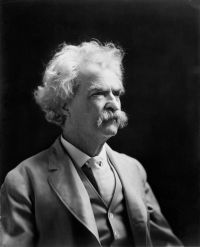 Mark TwainT. D. HallamGordon LamontCharles Amory BeachBurt M. McConnellRowland Walker
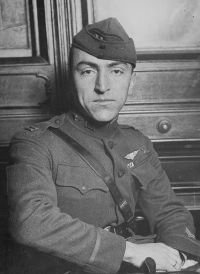 Eddie RickenbackerH. BarberPaul BewsherElmer HaslettNational Transportation Safety BoardCharles A. LindberghAmbrose NewcombEvan John DavidRufus Rockwell Wilson
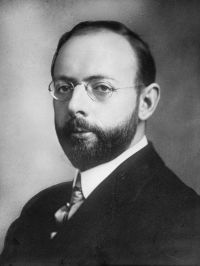 Herbert Eugene IvesIntelligence Service, U.S. Army Air Forces
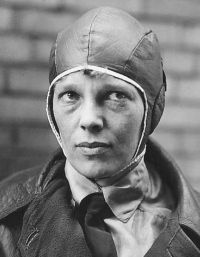 Amelia Earhart
The core challenge in air disaster investigations is determining where the machine's predictable limits end and the operator's fallibility begins. Historical precedents show that safety is a series of calculated trade-offs; analyzing error requires moving beyond simple blame to study complex human-system interactions.
The levee failures in Washington state reflect a perennial conflict between centralized planning and natural forces. Drawing on his life as a Mississippi pilot, Mark Twain argued that engineering hubris is merely the most visible manifestation of a deeper distrust in state authority and human nature's fundamental limits.