“ Even the tomtit--that saucy, beautiful rascal, with its crown of Cambridge blue, who had been the most refractory bird that Golden Cloud ever had to deal with, who would turn heels over head in the midst of a serious lesson, and who would hop and twist about and agitate its staid companions with its restless tricks--even the tomtit, whose greatest delight was to steal things and break things, but whose spirit had been subdued and tamed by Golden Cloud's firmness, assisted the veteran in its old age, and did not make game of it. ”
Tomtit
Definition and stakes
The theme of “tomtit” has been addressed by authors such as Harriet Beecher Stowe, B. L. Farjeon and Leander S. Keyser. It is often associated with terms like totem, totemism, clan, people and Australia.
Quotes about “tomtit”
 Harriet Beecher Stowe,
Dred: A Tale of the Great Dismal Swamp
Harriet Beecher Stowe,
Dred: A Tale of the Great Dismal Swamp
“ Come, put the waiter on the table, now; see if you can't walk, for once!"Casting down his eyes with an irresistible look of mock solemnity, Tomtit marched with the waiter, and placed it by his mistress.The good lady, after drawing off her gloves and making sundry little decorous preparations, said a short grace over her meal, during which time Tomtit seemed to be holding his sides with repressed merriment; then, gravely laying hold of the handle of the teapot she stopped short, gave an exclamation, and flirted her fingers, as she felt it almost scalding hot. ”
Leander S. Keyser, Our Bird Comrades
“ There was too much of an air of purpose about it to permit of the thought that it was a mere accident or coincidence; but whether it was a musical contest between rival vocalists, or the love song of a tomtit and his mate, I could not determine. Cunning in other ways, it would be strange if the tomtits did not display acuteness in the selection of nesting sites. A cosy hollow in a dead snag or stump is especially acceptable. ”
Harriet Beecher Stowe,
Dred: A Tale of the Great Dismal Swamp
“ Nesbit, kindling up in sudden wrath."Oh, I knows it," said Tomtit. "We's unprofitable servants, all on us. Lord's marcy that we an't 'sumed, all on us!"Nina was so completely overcome by this novel application of the text which she had heard her aunt laboriously drumming into Tomtit, the Sabbath before, that she laughed aloud, with rather uproarious merriment."Oh, aunt, there's no use! He don't know anything! He's nothing but an incarnate joke, a walking hoax!""No, I doesn't know nothing, Miss Nina," said Tomtit, at the same time looking out from under his long eyelashes. ”
Camille Lemonnier, Birds and Beasts
“ The nightingales lulled him to sleep with the melody of their concerts, the cock woke him with the shrill clarion-call of his crowing; all the day long he flitted and flew amid the endless twittering and warbling of linnets, tomtits, bullfinches, sparrows, and chaffinches, taking his part too in the orchestra, and near bursting his little throat to produce his finest notes, with that vanity that makes us one, and believe Nature has implanted in us the soul of an artist—a great, mysterious, unappreciated artist. ”
 James George Frazer,
The Golden Bough: A Study in Magic and Religion…
James George Frazer,
The Golden Bough: A Study in Magic and Religion…
“ But when a savage names himself after an animal, calls [pg 219] it his brother, and refuses to kill it, the animal is said to be his totem. Accordingly in the tribes of South-Eastern Australia which we have been considering the bat and the owl, the emu-wren and the superb warbler, may properly be described as totems of the sexes. But the assignation of a totem to a sex is comparatively rare, and has hitherto been discovered nowhere but in Australia. Far more commonly the totem is appropriated not to a sex, but to a clan, and is hereditary either in the male or female line. ”
 Andrew Lang,
Method in the Study of Totemism
Andrew Lang,
Method in the Study of Totemism
“ F. Boas (whose list is quoted by Mr. Frazer) and Holmberg (1856) do assign totemic names to the Tlingit clans.Let us examine this situation.If we take a South-East Australian tribe of the Barkinji pattern, we find it divided into two animal-named intermarrying phratries (or exogamous intermarrying "classes" or "moieties," I call them "phratries") . In each phratry are totem kins, that is, kins named after animals, vegetables, or other things in nature. The names of phratries and totem kins (I know no other word for them but totem kins or totem clans) descend in the female line. ”
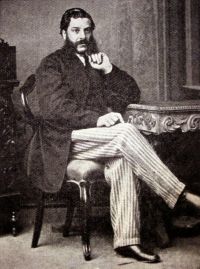 B. L. Farjeon,
Blade-O'-Grass. Golden Grain. and Bread and Cheese and Kisses
B. L. Farjeon,
Blade-O'-Grass. Golden Grain. and Bread and Cheese and Kisses
“ Ben Sparrow goes into the shop to serve, and Tottie is left alone with his effigy. Now it has been mentioned above that Tottie has a vice, and this is it: she is afflicted, not with a raging tooth, but with a tooth so sweet as to weaken her moral sense, so to speak: she is unable to resist temptation when it presents itself to her in the shape of sweetmeats or fruit, and her notions as to the sacredness of such-like property are so loose that (no one being by to see her do it) she helps herself. ”
Geoffrey Egerton-Warburton, In a Cheshire Garden: Natural History Notes
“ Tom-tits, unlike great-tits, bully one another most unmercifully. They can recognize each other at a great distance. A tom-tit on the food-stand seems to know at once whether another arriving on the nearest tree, some ten yards or more away, is his superior or inferior in prowess. Sometimes he will ruffle up his feathers as if in resentment at threatened intrusion, at other times he is prepared to make way at once. As is the case with a herd of cows on a farm, the relative standing between them seems to be an acknowledged matter and is seldom contested. ”
Andrew Lang,
Method in the Study of Totemism
“ Thus on every point—female descent, animal-named phratries, animal-named totem kins, and each phratry containing a totem kin of its own name, the Tlingit totemism is absolutely identical with that of many South-Eastern Australian tribes of the most archaic type.But the Tlingit, unlike the Australians, live in villages, and "the families or households may occupy one or more houses. The families actually take their names from places." ”
Andrew Lang,
Method in the Study of Totemism
“ William Duncan, a missionary among the Tsimshian tribe. All such evidence given prior to controversies about totemism is valuable. According to this account, the Indians used, as "crests," representations of Whale, Porpoise, Eagle, Raven, Wolf, Frog, etc. Every person was obliged to marry out of the name of the animal represented by his crest, and each "clan" tabooed its animal, "will never kill the animal which he has adopted for his crest, or which belongs to him as his birthright," that is, apparently, his "familiar," and his inherited totem. This is original totemism in North-West America. ”
Andrew Lang,
1911 Encyclopædia Britannica, Volume 27…
(1911)
“ Thus the Worgaia and Northern neighbours of the Arunta, with male descent, have certainly passed through a system of female descent of the totem, and actually inherit property in the female line, while Strehlow's Aranda or Arunta inherit their mothers' totems. Moreover Howitt shows us at least one tribe with female descent, the Dieri, actually in the process of diverging from female to male descent of the totem. “A step further is when a man gives his totem name to his son, who then has those of both father and mother. ”
H. R. Coulthard, The Story of an Ancient Parish…
“ Each tribe or section of the tribe has its Totem, an animal, bird or plant, with which it is supposed to be in close and intimate relationship, and from which the tribe or section of a tribe receives its name. Possibly Totemism may have had its origin in crude attempts of primitive men to prevent too close intermarriage, as men and women possessing the same Totem were not allowed to marry, whilst on the other hand it has been suggested that the custom was bound up with the view of primitive men with regard to sacrifice and inter-communion with their Gods. ”
 Alfred Henry Lewis,
The Sunset Trail
Alfred Henry Lewis,
The Sunset Trail
“ He would be placed in the deadly foreground with such worthies as Doc Holiday, Shotgun Collins, Curly Bill and Soapy Smith. Poets would make verses about him as they had about the sainted Samuel Bass, dance-hall maidens would sing his glory in quavering quatrains. Thus dreamed the Tomcat on the banks of the Canadian as he lay by a Turkey Track campfire, while his comrades declaimed of Mr. Masterson and the sorrowful taking off of Messrs. Wagner and Walker, aforesaid. It was the Tomcat’s vision of fame; rude, bloody, criminal, but natural for the man and the day and the land it grew among. ”
Andrew Lang,
1911 Encyclopædia Britannica
(1911)
“ It has often been suggested that totemism arose when the familiar of an individual became hereditary among his descendants. This could not occur under a system of reckoning descent and inheriting the kin name through women, but as a Tsimshian myth says that a man’s sister adopted his animal familiar, the bear, and transmitted it to her offspring, Hill-Tout supposes that this may have been the origin of totemism in tribes with reckoning of descent in the female line. Instances, however, are not known to exist in practice, and myths are mere baseless savage hypotheses. ”
Andrew Lang,
Method in the Study of Totemism
“ Now in normal totemism, not "the great majority," but all the members of any one totemic group belong to one or other moiety of the tribe. The totems being hereditary, they cannot wander out of their own into the other phratry, and, as all persons must marry out of their own phratry, they cannot marry into their own totem, for no person of their own totem is in the phratry into which they must marry.At present "the great majority" of members of each totem, among the Arunta, are in one phratry or the other. ”
Andrew Lang,
1911 Encyclopædia Britannica, Volume 27…
(1911)
“ It appears, then, that a man, having several totems, all the totems in his “clan,” must marry a woman of another “clan” who has all the totems of her “clan.” Similar multiplicity of totems, each individual having a number of totems, is described in Western Australia (Mrs Bates) . In this case the word “totem” seems to be used rather vaguely and the facts require elucidation and verification. In this part of Australia, as in Fiji [72] “pour la naissance . . . l'apparition du totem-animal avait toujours lieu.” ”
W. Pett Ridge, On the Central (1896)
“ Tomkins adroitly. “She said she might not be long, and on the other ’and she might be some little time—it all depended.” “Did she kiss me before she went away?” “Like anything,” said Mr. Tomkins. “I thought she were never going to leave off.” “She always does that.” The small boy smiled thoughtfully. “We love each other dreffully, my mamma and me.” “That’s right,” said Mr. Tomkins approvingly. “There’s nothing like it. Respect your parents when they’re young and when they grow up——”“Who are you?” demanded Master Anstruther. “Are you a new servant?” ”
 Emily Eden,
The Semi-attached Couple
(1890)
Emily Eden,
The Semi-attached Couple
(1890)
“ Indeed, I was rummaging for those keys, and when I brought the sal-volatile my lord gave it to her hisself, and my lord and me agreed that the best thing for me to do was to get her ladyship to bed; and my lord said, 'You had better stay by her, Mrs. Tomkins.' To be sure it is very strange he cannot learn my name; but anyhow I am satisfied about him and my lady, and I suppose he will find out I am called Tomkinson at last, and then everything will be as it should," which was a cheerful prospect to end with. ”
Andrew Lang,
Method in the Study of Totemism
“ Each of these four main divisions had totem kins within it, and, as usual, the same totem (all are animals) never occurred in more than one main division. (Howitt, N.T.S.E.A. p. 130.) In precisely the same way "crests" of animal name occur in each of the four Tsimshian "clans": These "crests," thus arranged, no crest in more than one clan (or phratry?) look like old totems in the two pairs of clans, or, as I suspect, of phratries. The Australian parallel corroborates the view that the Tsimshian "clans" have been phratries. [16] J. A. F. p. 187. quoting "Swanton 26th B. E. R., 1904-1905, p. ”
contessa Evelyn Lilian Hazeldine Carrington Martinengo-Cesaresco, The Place of Animals in Human Thought
“ The word Totem is an American Indian word for “badge,” and the word Taboo a Polynesian term meaning an interdiction. The Totemist generally says that he is descended from his Totem: hence the men and the beasts of each Totem clan are brothers. But the beast is something more than a brother, he is the perpetual reincarnation of the race-spirit. Numerical problems never trouble the natural human mind; all the cats of Bubastis were equally sacred, and all the crows of Australia are equally sacred to the clans who have a crow for Totem. ”
James Frazer, The Golden Bough — Chapter 67:… (1922)
“ This explanation of totemism squares very well with Sir George Grey's definition of a totem or _kobong_ in Western Australia. He says: "A certain mysterious connexion exists between a family and its _kobong,_ so that a member of the family will never kill an animal of the species to which his _kobong_ belongs, should he find it asleep; indeed he always kills it reluctantly, and never without affording it a chance to escape. This arises from the family belief that some one individual of the species is their nearest friend, to kill whom would be a great crime, and to be carefully avoided. ”
W. Pett Ridge, On the Central (1896)
“ Tomkins. “I’m noo—to a certain extent.” “You’ll have to smarten up, my man,” said the small boy. “You don’t brush your hair very often, do you?” “I run a comb through it now and again,” said Tomkins apologetically. “A man can’t be always a-titivating hisself—not a man, that is to say, who’s got his living to earn. You might be always at it if you’d nothing else to do.” Master Anstruther walked across and examined Tomkins more carefully. He seemed a little puzzled, and glancing round the small office his eyes again rested on Mr. Tomkins’ face. ”
Andrew Lang,
The Secret of the Totem
“ Nor must we confuse matters by regarding every animal now attached to any kind of association or individual as a totem. Each sex, in many Australian tribes, has an associated animal. Each dead man, in some communities, is classed under some name of an object of nature. Each individual may have a patron animal familiar revealed to him, in a dream, or by an accident, after a fast, or may have it selected for him by soothsayers. The totem kins may classify all things, in sets, each set of things under one totem. ”
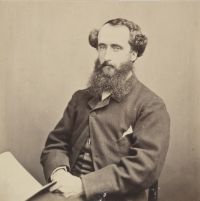 Alfred William Howitt,
Native Tribes of South-East Australia
(1904)
Alfred William Howitt,
Native Tribes of South-East Australia
(1904)
“ In speaking of the social organisation I have given a considerable number of lists of totems in connection with the class and sub-class divisions. In the chapter on Marriage and Descent I have further considered the totems in regard to these subjects. Something remains to be said as to the relations of the individual and the totem when it is a living creature. Each totem name represents a group of persons, and for this totem the term "group totem" is appropriate. It represents those persons who, to use a Wiradjuri expression, are all of the same budjan. ”
 Sigmund Freud,
Totem and Taboo
Sigmund Freud,
Totem and Taboo
“ In fact their whole social organization seems to serve this object or to have been brought into relation with its attainment.Among the Australians the system of Totemism takes the place of all religious and social institutions. Australian tribes are divided into smaller septs or clans, each taking the name of its totem. Now what is a totem? As a rule it is an animal, either edible and harmless, or dangerous and feared; more rarely the totem is a plant or a force of nature (rain, water) , which stands in a peculiar relation to the whole clan. ”
 Charles Hose,
The Pagan Tribes of Borneo
Charles Hose,
The Pagan Tribes of Borneo
“ Frazer's remarks on individual totems in his book on totemism: — "An Australian seems usually to get his individual totem by dreaming that he has been transformed into an animal of that species." "In America the individual totem is usually the first animal of which a youth dreams during the long and generally solitary fast which American Indians observe at puberty." ”
Andrew Lang,
The Secret of the Totem
“ It is useless to look for the origins of totemism among the peculiarities and "sports" which always attend the decadence of totemism, consequent on the change from female to male lineage, as Mr. Howitt, our leader in these researches, has always insisted. To search for the beginnings among late and abnormal phenomena, things isolated, done in a corner, and not found among the tribal organisations of the earliest types, is to follow a trail sure to be misleading. ”
“ He is apparently oblivious of Professor Sayce’s reference to a prehistoric age, ‘when the religious creed of Egypt was still totemism.’Dr. Codrington is next cited for the apparent absence of totemism in the Solomon Islands and Polynesia, and Professor Oldenberg as denying that ‘animal names of persons and clans [necessarily?] imply totemism.’ Who says that they do? ‘Clan Chattan,’ with its cat crest, may be based, not on a totem, but on a popular etymology. Animal names of individuals have nothing to do with totems. A man has no business to write on totemism if he does not know these facts. ”
