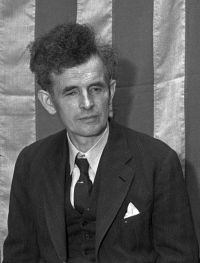
“ No, no, the flimsy hills of Australia were like a new world, and the frail inconspicuousness of the landscape, that was still so clear and clean, clean of all fogginess or confusion: but the frail, aloof, inconspicuous clarity of the landscape was like a sort of heaven—bungalows, shacks, corrugated iron and all. No wonder Australians love Australia. It is the land that as yet has made no great mistake, humanly. The horrible human mistakes of Europe. ”
Australians
Definition and stakes
The literary examination of "Australians" includes depictions of national identity, cultural uniqueness, and social dynamics within the Australian context. Authors such as D.H. Lawrence praised Australia’s untouched landscape as a symbol of purity, contrasting it with Europe’s "horrible human mistakes," while Henry Lawson underscored Australians’ sense of separation from other nations.
Arthur Patchett Martin explored internal divisions, emphasizing tensions between immigrant communities and Indigenous populations, and Alfred Buchanan contrasted Australians’ renowned hospitality with their political exclusivity. These differing viewpoints collectively reflect a theme grounded in pride, social complexity, and the interaction between identity and imperial loyalty, as illustrated by the nuanced portrayals of loyalty, competition, and self-definition throughout Australian literature.
Quotes about “Australians”
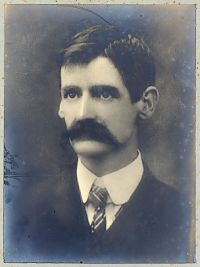 Henry Lawson,
United Division
(1888)
Henry Lawson,
United Division
(1888)
“ On the same line of reasoning, if Australians were to be Australians, or rather if Australians were as separate from any other nation as Australia from any other land, there would be no jealousy between them on England’s account. ”
Arthur Patchett Martin, Australia and the Empire — Chapter 7… (1889)
“ Now, this is the state of things that the Australians, on the very threshold of their existence as a people, have to face. So long as the Irish-Australian flocks slavishly obey their priests, there must be this great bar and division between what I have called the two races in Australia. ”
James Francis Hogan, The Irish in Australia (1888)
“ We as Australians delighting in the glorious climate of this favoured land, rejoice at, and, with all our energy and all our strength, standing shoulder to shoulder in muscular rivalry with our fellow colonists, assist in every work for the advancement of our adopted country, loyally striving for and proud of its progress, the report of which reads like a chapter of romance. ”
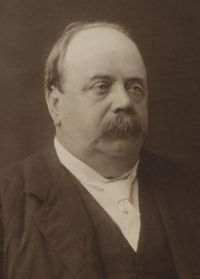 George Houstoun Reid,
The Australian Commonwealth and her relation to the British Empire
(1912)
George Houstoun Reid,
The Australian Commonwealth and her relation to the British Empire
(1912)
“ With equal heartiness we can appreciate and we can reciprocate the feelings of brotherliness and of respect and esteem, we for the Australians, that the Australians through his lips have told us they have for us, and when he goes back to Australia, after having seen something of our country, and speaks to his own kin there, he can carry to them just as warm appreciations from Canada as his eloquent can tongue put into language. ”
Alfred Buchanan, The real Australia (1907)
“ There are certain qualities—virtues, they may be called—that come prominently under notice in Australia and appear, from their habit of repeating themselves, to form some integral part of the life of the community. The foremost of these good qualities is that of hospitality. And here a singular anomaly presents itself. Politically the Australians are the most exclusive and the most inhospitable race on earth. ”
Arthur Patchett Martin, Australia and the Empire — Chapter 8… (1889)
“ Then will our destinies be in the hands of men who will be influenced only by a sincere and creditable amor patriæ, whose united cry may be earnestly resounded from York to Otway, from Perth to Brisbane—Australia for the Australians! ”
Sir Charles Wentworth Dilke, Greater Britain: A Record of Travel in English-Speaking Countries During 1866-7
“ In Australia there is promise of a more intellectual nation: the young Australians ride as well, shoot as well, swim as well, as the New Zealanders, are as little given to book-learning, but there is more shrewd intelligence, more wit and quickness, in the sons of the larger continent. ”
 David Christie Murray,
Recollections
David Christie Murray,
Recollections
“ Loyal Australians pooh-pooh these prints and entreat the stranger within their gates to believe that they are despised and without influence. The stranger has only to travel to learn better than this. The strongest current of Australian feeling is setting with the tide of growing power against the mother country. ”
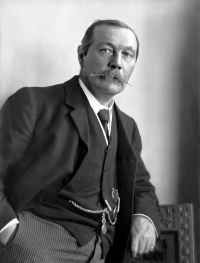 Arthur Conan Doyle,
The Wanderings of a Spiritualist
Arthur Conan Doyle,
The Wanderings of a Spiritualist
“ I was welcomed to Australia by a hospitable letter from the Premier, Mr. Hughes, who assured me that he would do what he could to make our visit a pleasant one, and added, "I hope you will see Australia as it is, for I want you to tell the world about us. We are a very young country, we have a very big and very rich heritage, and the great war has made us realise that we are Australians, proud to belong to the Empire, but proud too of our own country." ”
J. M. Gordon, The Chronicles of a Gay Gordon
“ It was really the outward sign of the affection and love for the Old Country and home inherited by the colonists. Indeed, the rising Australian generation realized what a glorious and magnificent heritage the Mother Country had so generously and freely entrusted to the care of the early pioneers, their forbears. From the day when the first Englishman set 189 foot in Australia and the first settlement was founded, right up to the year 1884, when the offer was made, no enemy had ever threatened Australia’s shores.Australians rejoice that theirs is the only “virgin” continent in this world. ”
 Carl Ritter,
Comparative geography
(1865)
Carl Ritter,
Comparative geography
(1865)
“ It has inherited all that was finished in the knowledge and culture of the continental world; what the people of that world have toiled for years to win, becomes at once the birthright of the Australians. ”
 Sydney Greenbie,
The Pacific Triangle
Sydney Greenbie,
The Pacific Triangle
“ But a strange thing has happened to Australia. She has got what she was after, and now she hardly wants it. She fought for the imperial conference method of settling imperial affairs. Australians have time and again declared that though an empire, they are a nation first and foremost. ”
George W. Bell, Mr. Oseba's Last Discovery
“ As social groups, the Australians, in their ‘free colonies,’ were in their vigorous youth—they were buoyant and ambitious. They looked abroad, beheld what others had done, and said, ‘Let us take another step,’ and being free and self-ruling, they were able to hurriedly adjust their political machine to their local requirements. ”
R. G. Latham, The Natural History of the Varieties of Man
“ The only vocabulary of Australia, where the numerals run beyond five, is that of King George's Sound, as given in Mitchell's Australia.The political constitution (if so it can be called) of the Australians is preeminently simple, exhibiting a society of families rather than of tribes; and one of the facts connected with the evidence in favour of the unity of the Australian division of mankind is the remarkable distribution of families bearing the same name. ”
 Andrew Lang,
Myth, Ritual and Religion, Vol…
Andrew Lang,
Myth, Ritual and Religion, Vol…
“ Thus, on the evidence of institutions, it is plain that the Australians are (or before the influence of the Europeans became prevalent were) in a state of mind which draws no hard and fast line between man and the things in the world. If, therefore, we find that in Australian myth, men, gods, beasts, and things all shift shapes incessantly, and figure in a coroboree dance of confusion, there will be nothing to astonish us in the discovery. ”
Alfred Buchanan, The real Australia (1907)
“ He knows that in a particular circle, a circle that is largely the preserve of soulless aristocrats and commonplace millionaires and pushful Americans, there can be heard every now and then the exclamation, “Oh, Australians!” ”
Timothy Coghlan, John Gregory, William Arnold and Ronald McNeill, 1911 Encyclopedia Britannica (1911)
“ He regards the Australians as representing the lowest and most primitive examples of this primitive Caucasic type, and he urges that they must have arrived in Australia at a time when their ancestors had no pottery, knew no agriculture, domesticated no animals, had no houses and used no bows and arrows. ”
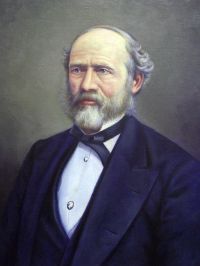 Lewis Henry Morgan,
Ancient Society
Lewis Henry Morgan,
Ancient Society
“ Such pictures of human life enable us to understand the condition of savagery, the grade of its usages, the degree of material development, and the low level of the mental and moral life of the people. Australian humanity, as seen in their cannibal customs, stands on as low a plane as it has been known to touch on the earth. And yet the Australians possessed an area of continental dimensions, rich in minerals, not uncongenial in climate, and fairly supplied with the means of subsistence. ”
Andrew Lang,
Myth, Ritual, and Religion
(1887)
“ Even on the hypothesis that the natives of Australia, for example, were discovered in a state of culture more backward than that of other known races, yet the institutions and ideas of the Australians must have required for their development an incalculable series of centuries. ”
Henry de Rosenbach Walker, Australasian Democracy
“ This policy is not heroic but practical, especially if it could be accompanied by a greater identification of Australia with the Empire. If a few hundred Australians could be recruited, in spite of the lowness of the pay, for service in the Army and Navy, they would, I am convinced, upon {299} their return, do much to broaden the minds of their countrymen. Australia and New Zealand, it must be remembered, are isolated from the rest of the world. ”
William Westgarth, Personal Recollections of Early Melbourne and Victoria
“ Most of these are long since the fathers of families, native Australians, including sons who not unfrequently finished their education in the mother country—a dutiful deference which Australia may surely not yet quarrel with. ”
 Philip E. Muskett,
The Art of Living in Australia
Philip E. Muskett,
The Art of Living in Australia
“ Quite recently an observing writer, in a keenly analytical if somewhat facetious article, gave it as his opinion that the coming Australians will be as follows:—"They will not be so entirely agricultural as the Americans were; they will be horsemen, not gig-drivers. ”
Arthur Patchett Martin, Australia and the Empire — Chapter 8… (1889)
“ The rising generation has been nurtured under a new and dry light, mental and moral, while the old and decaying one was forced in a hothouse of falsity. Evolution promises that we shall be better thinkers and workers than our predecessors, and the dispassionate observer must admit that my proposition that Australia will never be properly governed till she is ruled by native-born (sic) Australians has after all more of a real than a hypothetical basis. ”
Various, Popular Science Monthly (1898)
“ It has been asserted that the Australians represent a degenerate race, and that their remote ancestors had attained a far higher degree of civilization. Some paintings, which adorn the walls of caves on Glenelg River, in northwestern Australia, have been adduced in support of this hypothesis. ”
Arthur Patchett Martin, Australia and the Empire — Chapter 8… (1889)
“ The coming Australian is to enter upon the stage freed from all the wretched impedimenta of the historic past. His advent is to mark an entirely new era. When he takes over his patrimony, Australia, from his father, the "foreigner," the astonished Old World will see something very like a new revelation upon this earth. ”
Arthur Patchett Martin, Australia and the Empire — Chapter 8… (1889)
“ Australian, like the greatest of living poets in his youth, had, as we have seen, "dipped into the future far as human eye could see;" and perhaps, if one may be allowed to say so, somewhat further. The old Pioneer, after the pathetic manner of men who have turned the solemn side of fifty, prefers to look in the opposite direction. ”
 José Rizal,
The Philippines a Century Hence
José Rizal,
The Philippines a Century Hence
“ The Philippine races, like all the Malays, do not succumb before the foreigner, [60] like the Australians, the Polynesians and the Indians of the New World. ”
 Patrick MacGill,
The Diggers: The Australians in France
Patrick MacGill,
The Diggers: The Australians in France
“ Men from all parts of the continent, from out back and from the sea-coast are grouped together in one great brotherhood, [120] fighting for a common cause, and the ground over which they fight is the one central point on which all eyes of Australia are directed. ”
Arthur Patchett Martin, Australia and the Empire — Chapter 8… (1889)
“ But after all, this "foreign pressure" has not been continuous enough to weld the Australian colonies into a single dominion. A kind of loose Bund has been established between Victoria, Queensland, Tasmania, and the still inchoate Western Australia; the colonies of New South Wales, South Australia, [3] and New Zealand remaining aloof. ”
R. Hugh Knyvett, "Over There" with the Australians
“ Practically every book written on Australia by an Englishman or an American has said the same thing, that we were a lovable, easy-going race, but did not work very hard, and in a serious crisis would be found wanting. ”
Ethel Gwendoline Vincent, Forty Thousand Miles Over Land and Water
“ Before leaving Australia (though politics are not within my province) , I must say that throughout Australasia there is a strong feeling among all classes for a closer union with the mother country. The loyalty of the people to the Crown and the Empire is unbounded; but Australia finds herself strong, and should any coldness be displayed by the Home Government, a cry for separation may soon be raised, and we should never forget that, "as a field for British [199] trade, as an outlet for our surplus population, and as producers of our food, our colonies are to us indispensable." ”
C. E. W. Bean, Letters from France
“ It is these men—not the men who shout at stadiums and race meetings at home, but the simple, willing men who are described in this letter—who are making Australia's name for her—and just at present holding on to it like grim death. ”
 Frank Fox,
Peeps At Many Lands: Australia
Frank Fox,
Peeps At Many Lands: Australia
“ I have never yet met a British man or boy who was of the right manly type who did not love Australian life after a little experience. The great distances, the cheery hospitality, the sunny climate, the sense of social freedom, the generous return which Nature gives to the man who offers her honest service—all these appeal and make up the sum of that strong attraction Australia has to her own children and to colonists from the Motherland. ”
Sir Charles Wentworth Dilke, Greater Britain: A Record of Travel in English-Speaking Countries During 1866-7
“ Morally and intellectually, at all events, the colonies are thriving. A literature is springing up, a national character is being grafted upon the good English stock. What shape the Australian mind will take is at present somewhat doubtful. In addition to considerable shrewdness and purely Saxon capacity and willingness to combine for local objects, we find in Australia an admirable love of simple mirth, and a serious distaste for prolonged labor in one direction, while the down-rightness and determination in the pursuit of truth, remarkable in America, are less noticeable here. ”
George R. Parkin, Imperial Federation: The Problem of National Unity
“ It was often pointed out to me in Australia, by the older inhabitants, and particularly the older politicians, that among the un-travelled younger people of the colonies there was at present an extraordinarily exaggerated opinion of the absolute and relative importance of Australia in the world. A stranger naturally hesitates to generalize on the truth of such a criticism, though marking individual illustrations. I had the privilege of addressing a gathering of young men of the Sydney University. ”
 Elinor Mordaunt,
On the Wallaby Through Victoria
Elinor Mordaunt,
On the Wallaby Through Victoria
“ As a matter of fact, I had conceived a very clear mental picture of Australia as a burly, farmer-like person, with one hand outstretched in welcome, the other filled with desirable billets of all sorts, which awaited some new-comer, with that wide outlook possible only to one who has rubbed shoulders with the oldest civilization, the completest culture. ”
A. J. Dawson, The Record of Nicholas Freydon
“ The Australian national character is the English national character of, say, seventy or eighty years ago, subjected to isolation from all foreign influences, and to general conditions much easier and milder than those of England; given unlimited breathing-space, and freed from all pressure of confined population; cut off also, to a very great extent, from the influence of tradition and ancient institutions. For the lover of our British stock and the student of racial problems, I always think that Australia and its people offer a field of unique interest. ”
John Davis, Tracks of McKinlay and party across Australia (1863)
“ The Australian colonies may well be congratulated not only upon their taking upon themselves the entire cost and management of the exploration of this part of the empire, but upon the vigour with which they are prosecuting their exploratory duties—a vigour that promises ere long to make the whole of Australia about as familiar to us as the other parts of the colonial empire. ”
J. Currie Elles, The influence of commerce on civilization
“ Australia has acquired her territory under the aegis of the Union Jack, and that cheaply and without contest. The great motherland flag, fluttering over this great island—or continent, shall I call it?—ensures peace and prosperity to her inhabitants. No other country in the world enjoys such freedom, without preliminary expense in blood and treasure, as does this land of Australia. The great mother country is lenient with her fair daughter in her woman-like perverse moods. ”
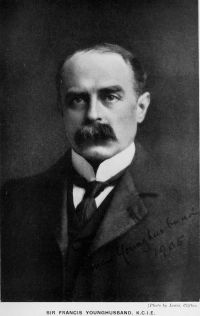 Sir Francis Edward Younghusband,
The Heart of Nature; or, The Quest for Natural Beauty
Sir Francis Edward Younghusband,
The Heart of Nature; or, The Quest for Natural Beauty
“ Each Australian acting on his own initiative, and all in their togetherness, created the Australian spirit, which again reacting upon each Australian induced him to act in accordance with that spirit. And so in time Australia, assimilating individuals from outside and absorbing them into its texture, and imbuing them with the Australian spirit, grew up into manhood in the Great War and astonished the world by its strong individuality, its character, intelligence, determination, and good comradeship. ”
Related terms
Authors who wrote about “Australians”
Arthur Patchett MartinGeorge Houstoun ReidAndrew LangAlfred BuchananTimothy Coghlan, John Gregory, William Arnold and Ronald McNeillHenry Lawson D. H. LawrenceJames Francis HoganArthur Conan DoyleSir Charles Wentworth DilkeCarl RitterSydney GreenbieGeorge W. BellDavid Christie MurrayJ. M. GordonR. G. LathamLewis Henry MorganHenry de Rosenbach WalkerWilliam WestgarthPhilip E. Muskett
George Houstoun ReidAndrew LangAlfred BuchananTimothy Coghlan, John Gregory, William Arnold and Ronald McNeillHenry LawsonD. H. LawrenceJames Francis HoganArthur Conan DoyleSir Charles Wentworth DilkeCarl RitterSydney GreenbieGeorge W. BellDavid Christie MurrayJ. M. GordonR. G. LathamLewis Henry MorganHenry de Rosenbach WalkerWilliam WestgarthPhilip E. Muskett