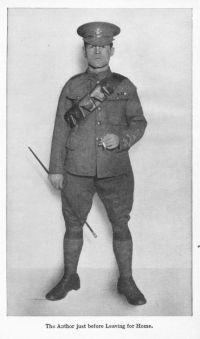
“ Bags of grain were being lifted on long chains; dark derricks shoved out lean arms that waved to and fro as if inviting somebody to come near; cattle lowing and slipping were being hammered by the drovers’ blackthorns into the hold; a tall man with face fierce and swarthy, eyes bright as fire, and mouth like a raw, red scar, was roaring out orders in a shrill voice, and suddenly in the midst of all this Norah saw Micky’s Jim leaning against the funnel of the boat, his hands deep in his trousers’ pockets and the eternal pipe in his mouth, apparently heedless of all that was going on around him. ”
Patrick MacGill
Biographical details

Patrick MacGill (1889–1963), an Irish journalist, poet, and novelist known as “The Navvy Poet,” drew deeply from his background as a laborer and his service in World War I to craft works exploring the harsh realities of manual labor, the brutality of war, and the tenacity of Irish life. His novels, including Children of the Dead End and The Rat-Pit, combine autobiographical realism with vivid depictions of trench warfare and social conflict, while his poetry conveys the raw vitality of working-class life.
A prolific writer whose body of work encompasses novels, plays, and verse, MacGill’s influence continues through annual festivals in his native Glenties and adaptations such as the 2009 docu-drama Child of the Dead End, solidifying his status as a chronicler of both physical labor and human perseverance.
Quotes by Patrick MacGill
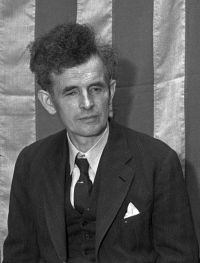 Patrick MacGill,
Children of the Dead End: The Autobiography of an Irish Navvy
Patrick MacGill,
Children of the Dead End: The Autobiography of an Irish Navvy
“ But to man, a physical contest is a pastime and a joy. I love to see a fight with the bare fists, the combatants stripped naked to the buff, the long arms stretching out, the hard knuckles showing white under the brown skin of the fists, the muscles sliding and slipping like live eels under the flesh, the steady and quick glance of the eye, the soft thud of fist on flesh, the sharp snap of a blow on the jaw, and the final scene where one man drops to the ground while the other, bathed in blood and sweat, smiles in acknowledgment of the congratulations on the victory obtained. ”
Patrick MacGill,
The Red Horizon
“ In our trenches near Souchez you can see the eternal artillery fighting on the hills of Lorette, up there men are flicked out of existence like flies in a hailstorm. The big straight road out of a village runs through our lines into the German trenches and beyond. The road is lined with poplars and green with grass; by day you can see the German sandbags from our trenches, by night you can hear the wind in the trees that bend towards one another as if in conversation. There is no whole house in the place; chimneys have been blown down and roofs are battered by shrapnel. ”
Patrick MacGill,
The Great Push: An Episode of the Great War
“ Every object in Loos seemed to loose its reality, a spectral glimmer hung over the ruins, and the walls were no more than outlines. The Twin Towers was a tracery of silver and enchanted fairy construction that the sun at dawn might melt away, the barbed-wire entanglements (those in front of the second German trench had not been touched by our artillery) were fancies in gossamer. The world was an enchanted poem of contrasts of shadow and shine, of nooks and corners black as ebony, and prominent objects that shone with a spiritual glow. ”
Patrick MacGill,
The Brown Brethren
“ Clothes are seldom dry, they cling to the body like the rags of a drowned man, scourging and scaling the flesh. The cold rain stings the flesh, the snow freezes the fingers. Marching is difficult, the roads are thick with mud, and all roads lead to the firing line, the line of red agony, of desolation. The soldier is a mute, impotent figure, a blind pawn in the game of war. The billets are cold and cheerless. The broken roof, which allowed the winds of night to play round the sleepers in the hot summer weather, now lets in the cold and wet. ”
Patrick MacGill,
The Diggers: The Australians in France
“ The land of the Somme is not alone deserted and ravaged. It is dead, utterly laid waste as if the lava of war had not alone fallen on it, but blotted it out as a sand storm smothers the landmarks of a desert. Of the great trees which lined the roadways nothing remains save the peeled stumps, that stretch mile after mile as far as the eye can see, passive relics of the hate which swept over them and broke them down. Never again will they bear a leaf or call to the dead earth for the food which gave green to their foliage. ”
“ She undressed to her white cotton chemise, lay down, and Sheila gathered the blankets round the young woman with tender hands. Norah appeared calm, her fingers for a moment toyed with the tresses over her brow, then she drew her hand under the blankets. Her face had taken on a new light; the cold look of despair had suddenly given place to a new and nervous interest in life and in herself. It seemed as if things had assumed a new character for her; as if she understood in a vague sort of way that a woman’s life is always woven of dreams, sorrow, love, and self-sacrifice. ”
Patrick MacGill,
The Amateur Army
“ There are three things in military life which make a great appeal to me; the rifle's reply to the pull of the trigger-finger, the gossip of soldiers in the crowded canteen, and the onward movement of a thousand men in full marching order with arms at the trail. And at no time is this so impressive as at night when with rifles held in a horizontal position by the side, the arm hanging easily from the shoulder, we march at attention in complete silence. ”
Patrick MacGill,
The Red Horizon
“ The sang-froid which carried us through many a tight corner with credit utterly deserted us, we were washed-out things; with noses to the cold earth, like rats in a trap we waited for the next moment which might land us into eternity. The excitement of a bayonet charge, the mad tussle with death on the blood-stained field, which for some reason is called the field of honour was denied us; we had to wait and lie in the trench, which looked so like a grave, and sink slowly into the depths of depression. ”
Patrick MacGill,
Children of the Dead End: The Autobiography of an Irish Navvy
“ Only in drink was there contentment, only in a fight was there excitement. I hated the brown earth, the slushy muck and gritty rock, but in the end hatred died out and I was almost left without passion or longing. My life now had no happiness and no great sadness. My soul was proof against sorrow as it was against joy. Happiness and woe were of no account; life was a spread of brown muck, without any relieving splash of lighter or darker colours. For all that, I had no great desire (desire was almost dead even) to go down to the Lowlands and look for a newer job. ”
Patrick MacGill,
The Great Push: An Episode of the Great War
“ I walked up to the church by the trench through the graveyard where the white bones stuck out through the parapet. A pale mist gathered round the broken headstones and crept along the bushes of the fence. The Twin Towers stood in air—moody, apathetic, regardless of the shrapnel incense that the guns wafted against the lean girders. Sparrows twittered in the field, and a crow broke clumsily away from the branches in the spinney. A limber jolted along the road near me creaking and rumbling. On! driver, on! Get to Les Brebis before the dawn, and luck be with you! If the enemy sees you! ”
“ Norah wore a soft grey tweed dress that became her well. She had bought it in Greenock a week before, and when Dermod looked at the dress with a critical eye she wondered why she had put it on. But his look turned to one of admiration when his eye fell on the sweet face of the young girl, the eyes gentle and wistful, the white neck and the pure brow half hidden by the brown ruffled tresses. Something leapt into the heart of the young man, a thought which he could not put into words flashed through his mind, held him tense for a moment and then flitted away. ”
Patrick MacGill,
The Brown Brethren
“ He could see the ruined cottage in front now, a black blur against the night. The limitless levels stretched out on either side, frogs croaked in the ponds, now and then a light shot up from the fields, trembled in air for a moment and died away. The breezes of the night, the "unseen multitude," as the ancients called them, capered by, crooning wearily. In front, far ahead, the artillery fire redoubled in intensity and the sky was lit by the brilliance of day."Hell's loose out there," said the stranger. "It's not good to be there; it's not good to die." ”
Patrick MacGill,
The Diggers: The Australians in France
“ Here in this battle-wracked region the Australians were up against it. And "up against it" means everything, from the shattering on the parados of the mail bag with a letter from home, to the horrible death as men were sucked inch by inch into the rising mud of a slushy trench, sinking down into a grave where every effort to get clear was futile and where the tomb, cold, clammy and slimy, rose up to engulf the helpless victim. ”
Patrick MacGill,
The Great Push: An Episode of the Great War
“ No doubt a fire was now lit in the corner near the wall, my sleeping place, and Bill Teake was there preparing a mess-tin of tea.The hour was twilight, the hour of early stars and early star-shells, of dreams and fancies and longings for home. It is then that all objects take on strange shapes, when every jutting traverse becomes alive with queer forms, the stiff sandbag becomes a gnome, the old dug-out, leaning wearily on [199] its props, an ancient crone, spirits lurk in every nook and corner of shadows; the sleep-heavy eyes of weary men see strange visions in the dark alleys of war. ”
Patrick MacGill,
Children of the Dead End: The Autobiography of an Irish Navvy
“ Inside each shack a dozen or more gamblers sat cross-legged in circles on the ground, playing banker or brag, and the clink of money could be heard as it passed from hand to hand. Above them the naphtha lamps hissed and spluttered and smelt, the dim, sickly light showed the unwashed and unshaven faces beneath, and the eager eyes that sparkled brightly, seeing nothing but the movements of the game. Down in the cuttings men were labouring on the night-shift, gutting out the bowels of the mountain places, and forcing their way through the fastness steadily, slowly and surely. ”
Patrick MacGill,
The Red Horizon
“ Each lonely in a different land.The night was murky and the air was splashed with rain. Following the line of trench I could dimly discern the figures of my mates pulling off their packs and fixing their bayonets. These glittered brightly as the dying fires from the trench braziers caught them, and the long array of polished blades shone into their place along the dark brown sandbags. Looking over the parados I could see the country in rear, dim in the hazy night. A white, nebulous fog lay on the ground and enveloped the lone trees that stood up behind. ”
“ If ever you think that the earth is asleep, Norah, be careful. Maybe when you grow up some man will say to you: ‘I like you better than anyone else in the world.’ That will be very nice to listen to, Norah. Maybe you’ll walk with the man on a lonely moor or on the strand beside the sea. It will be night, and there will be many stars in the sky, and you’ll not say they’re cold then as you said this morning, Norah. All at once you’ll stop and listen. You’ll not know why you listen for everything will be so quiet. ”
Patrick MacGill,
The Brown Brethren
“ The air was full of the smell of musty wood, of straw, and of the byre underneath. All was very quiet, little could be heard save the breathing of the men, the noise of the restless cattle as they lay down or got up again. Snoggers and Benners laid themselves on the straw, Bowdy curled up like a dog, Snoggers stretched out as stiffly as a statue. Bubb undressed and Fitzgerald, getting to his feet, applied sticking plaster to the dog's bite."You'll go mad, you know," said Fitzgerald. "The only thing that can save you is to get three hairs of the dog that bit you and put them on here." ”
Patrick MacGill,
Children of the Dead End: The Autobiography of an Irish Navvy
“ But my love for Norah was different. To me she represented a youthful ideal which was too beautiful and pure to be degraded by anything in the world.Norah had given her love to another. Who was I that I should blame her? In her love she was helpless, for love is not the result of effort. It cannot be stopped; its course cannot be stayed. As well ask the soft spring meadows to prevent the rising freshet from wetting the green grass, as ask a maiden to stem the torrent of the love which overwhelms her. Love is not acquired; it is not a servant. It comes and is master. ”
Patrick MacGill,
The Red Horizon
“ What did it matter where a shell hit me now, a weak useless thing at the bottom of a trench? Let it come, blow me to atoms, tear me to pieces, what did I care? I felt like one in a horrible nightmare; unable to help myself. I lay passive and waited.I believe I dozed off at intervals. Visions came before my eyes, the sandbags on the parapet assumed fantastic shapes, became alive and jeered down at me. I saw Wee Hughie Gallagher of Dooran, the lively youth who is so real to all the children of Donegal, look down at me from the top of the trench. ”
Patrick MacGill,
The Great Push: An Episode of the Great War
“ The dug-out with its flickering taper gave me an idea of cosiness, coming in as I did from the shell-scarred village and its bleak cobbled streets. To sit down here on a sandbag (Bill had used the wooden seats for a fire) where men had to accommodate themselves on a pigmy scale, was very comfortable and reassuring. The light of the candle and brazier cast a spell of subtle witchery on the black walls and the bayonets gleaming against the roof, but despite this, innumerable shadows lurked in the corners, holding some dark council. ”
Patrick MacGill,
The Amateur Army
“ I learned that Tommy Atkins, no matter from what class he is recruited, is immortal, and that we British are one of the most military nations in the world. I have learned to love my new life, obey my officers, and depend upon my rifle; for I am Rifleman Patrick MacGill of the Irish Rifles, where rumour has it that the Colonel and I are the only two real Irishmen in the battalion. It should be remembered that a unit of a rifle regiment is known as rifleman, not private; we like the term rifleman, and feel justly indignant when a wrong appellation plays skittles with our rank. ”
Patrick MacGill,
The Brown Brethren
“ Love is the only allurement in existence," said Fitzgerald rising to his feet. "It is the essence of life. Love, free and unrestrained, not tied to the pillars of propriety by the manacles of marriage. (That's a damned smart phrase, isn't it, Spudhole?) Love is sacred, marriage is not, marriage is governed by laws, love is not. Nature has given us love. It is an instinct and we shouldn't fight against it too much. Why should we fight against a gift from God? ”
“ He felt full of the importance of a man who knows that everybody around him trembles under his eyes. Three or four young fellows were digging the grave and joking loudly as they worked; a crowd of men stood round them, puffing white clouds of smoke up into the air. Many of the women were kneeling beside graves that held all that remained of one or another near and dear to them. Norah Ryan stood alone with the priest, her dark shawl drawn over her white forehead, and a few stray tresses, that had fallen over her face, shaking in the breeze. ”
Patrick MacGill,
Children of the Dead End: The Autobiography of an Irish Navvy
“ We were an army of scarecrows, ragged, unkempt scare crows of civilisation. We came down from Kinlochleven in the evening with the glow of the setting sun full in our faces, and never have I looked on an array of men such as we were. Some were old, lame men who might not live until they obtained their next job, and who would surely drop at their post when they obtained it. These were the veterans of labour, crawling along limply in the rear, staggering over boulders and hillocks, men who were wasted in the long struggle and who were now bound for a new place—a place where a man might die. ”
Patrick MacGill,
The Red Horizon
“ Looking northward when one dared to raise his head over the parapet for a moment, could be seen white lines of chalk winding across a sea of green meadows splashed with daisies and scarlet poppies. Butterflies flitted from flower to flower and sometimes found their way into our trench where they rested for a moment on the chalk bags, only to rise again and vanish over the fringes of green that verged the limits of our world. ”
Patrick MacGill,
The Great Push: An Episode of the Great War
“ Bully-Grenay was withering to earth. The night itself was dark and subdued, not a breeze stirred in the poplars which lined the long, straight road. Now and again, when a star-shell flamed over the firing line, we caught a glimpse of Bully-Grenay, huddled and helpless, its houses battered, its church riven, its chimneys fractured and lacerated. We dreaded passing the church; the cobbles on the roadway there were red with the blood of men. ”
Patrick MacGill,
The Brown Brethren
“ A galaxy of starshells lit up the heavens and a big shell of another pattern whirled across the open and burst with a dizzy clatter. In the distance could be heard the transports of war clattering along the roads, the clank of rails unleaded at some far-off railway siding, and gleaming luridly against the darkness could be seen the flames of a building on fire some dozen miles away. Near Fitzgerald lay a dead man, further off another, looking like an empty sack flung on the ground. ”
“ The fear that she had had of becoming a mother was past and the supreme joy of motherhood now was hers. She knew that she would be jealous of the father if he was with her at present; as matters stood the child was her own, her very own, and nothing else mattered much. Sometimes she would sit for an hour, her discarded scissors hanging from her fingers, gazing hungrily at the saffron-red downy face of the child, anticipating every movement on its part, following every quiver of its body with greedy eyes. In the child lay Norah’s hopes of salvation ”
Patrick MacGill,
Children of the Dead End: The Autobiography of an Irish Navvy
“ Bury him deep in the red, red muck, and pile the clay on his breast,For all that he needs for his years of toil are years of unbroken rest. "And who has mothered this kinless one? Why should we want to knowAs we hide his face from the eyes of men and his flesh from the hooded crow?Had he a sweetheart to wait for him, with a kiss for his toil-worn face?It doesn't matter, for here or there another can fill his place. "Is there a prayer to be prayed for him? Or is there a bell to toll?We'll do the best for the body that's dead, and God can deal with the soul. ”
Patrick MacGill,
The Red Horizon
“ We passed through the lane made by the shell and flopped flat to earth on the other side when a German star-shell came across to inspect us. The world between the trenches was lit up for a moment. The wires stood out clear in one glittering distortion, the spinney, full of dark racing shadows, wailed mournfully to the breeze that passed through its shrapnel-scarred branches, white as bone where their bark had been peeled away. In the mysteries of light and shade, in the threat that hangs forever over men in the trenches there was a wild fascination. ”
Patrick MacGill,
The Great Push: An Episode of the Great War
“ Then a livid flash lit a near dug-out; lumps of earth, a dozen beams and several sandbags changed their locality, and a man was killed by concussion. When the body was examined no trace of a wound could be seen. Up the street of Loos was a clatter and tumult. A house was flung to earth, making a noise like a statue falling downstairs in a giant's castle; iron girders at the coal-mine were wrenched and tortured, and the churchyard that bordered our trench had the remnants of its headstones flung about and its oft muddled graves dug anew by the shells. ”
“ She looked back to the shed, saw the faces round the gaming-table, old Maire knitting in the corner, her needles showing brightly as the firelight played on them. A disused cart-wheel hung from the wall; she had never noticed it before.... Here in the dark beyond the circle of light something terrible threatened her, something that she could not comprehend but which her beating heart told her was wrong, and should be avoided. Why should she be afraid? Norah had all the boldness of innocence: her virtue was not armed with that knowledge which makes it weigh its every action carefully. ”
Patrick MacGill,
The Brown Brethren
“ We labour in the trenches with rifle, maul and spade, We're soldiers, cooks and carpenters, and everything to trade; We stand on sentry-go all night and turn to kip at dawn, But when we're dropping off to sleep it's "Up and carry on"— For it's carry on and carry on and carry on all day; They'll make us carry on until they carry us away; It's carry on the whole day through, at dusk as well as dawn— Oh blimey! will they never stop their blooming Carry On! ”
Patrick MacGill,
Children of the Dead End: The Autobiography of an Irish Navvy
“ We were now working on a farm where the River Clyde broadens out to the waters of the deep ocean. One evening, when supper was over, I went out alone to the fields and sat down on the green sod and looked outwards to the grey horizon of the sea. Beside me ran a long avenue of hazel bushes, and a thrush was singing on a near bough, his amber and speckled bosom quivering with the passion of his song. The sun had already disappeared, trailing its robe of carmine from off the surface of the far water, and an early star was already keeping its watch overhead. ”
Patrick MacGill,
The Great Push: An Episode of the Great War
“ Long lines of men in grey, keeping close to the shelter of spinneys sunk in shadow; transport wagons rumbling and jolting, drivers unloading at the "dumps," ration parties crossing the open with burdens of eatables; men thinking of home and those they loved as they sat in their leaky dug-outs, scrawling letters by the light of their guttering candles. This was the life that went on in and behind the German lines in the darkness and rain.Presently hell would burst open and a million guns would bellow of hatred and terror. ”
“ Society, sated with the labour of her hands, asked for her soul, and society, being the stronger, had its demand gratified.But over it all, over the medley of pain and sorrow, over the blazing crucible of existence in which all fair dreams and hopes of the woman were melted away, greater and more powerful than anything else in Norah’s life, intense and enduring, unselfish and pure, shone the wonderful flame, the star of passionate love shining in the holy heaven of motherhood. ”
Patrick MacGill,
The Brown Brethren
“ Spudhole went out, crawled up on the firestep and relieved the sentry. Leaning both arms on the parapet, he looked over No Man's Land towards the German trenches. The levels in front, a shell-scarred spread of ground set off in its ghastly array of barbed wire entanglements, was covered with snow. Here Nature had only one mood, a mood of sulky menace which overawed and subdued the tempers of the onlookers. The sky was coldly clear and a million stars showed in its broad expanse. ”