“ The warning from an unseen steamer going out was as if a soul, crossing this Styx, now knew all. There is no London on the Thames, after sundown. Most of us know very little of the River by day. It might then be no more native to our capital than the Orientals who stand under the Limehouse gas lamps at night. It surprises us. We turn and look at it from our seat in a tram, and watch a barge going down on the ebb—it luckily misses the piers of Blackfriars Bridge—as if a door had unexpectedly opened on a mystery, revealing another world in London, and another sort of life than ours. ”
H. M. Tomlinson
Biographical details

H. M. Tomlinson (1873–1958), a British writer and journalist, is renowned for his anti-war advocacy, travel writing, and vivid depictions of maritime life. His works—such as The Sea and the Jungle, London River, and Old Junk—examine themes of nature’s majesty, existential contemplation, and the human experience in times of conflict.
Tomlinson’s precise, evocative prose, combining lyrical observation with analytical depth, established him as a unique voice in early 20th-century literature, though his literary legacy remains connected to discussions about his stylistic innovation and impact.
Quotes by H. M. Tomlinson
“ It was long past noon, and by the look of the rest-house, and the empty lane beyond the garden, and the prospect of the slope of the mountain, Ternate was abandoned. There was not a sound. Nothing moved; not a bird, not a frond. The fronds might have been of enameled metal. Perhaps everybody had departed in the steamer and the island was mine. I felt, as did Robinson Crusoe, that I must go out and make an inventory of my fortune. The lane led up toward the impending declivity, but as though that ascent were far too steep it turned lazily northward among the easy groves parallel to the beach. ”
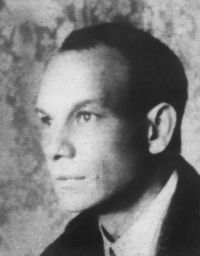 H. M. Tomlinson,
Waiting for Daylight
H. M. Tomlinson,
Waiting for Daylight
“ It is like the sardonic grin I have seen on the face of an intelligent soldier as he strode over filth and corpses towards shell-fire. Soldiers, when they are home again, delight in watching the faces and the ways of children. They want to play with the youngsters, eat buns in the street, and join the haymakers. They do not want the truth. Without knowing anything of Freud, they can add to their new and dreadful knowledge of this world all they want of the subconscious by reading the warlike speeches of the aged, one of the most obscene and shocking features of the War. ”