“ The warning from an unseen steamer going out was as if a soul, crossing this Styx, now knew all. There is no London on the Thames, after sundown. Most of us know very little of the River by day. It might then be no more native to our capital than the Orientals who stand under the Limehouse gas lamps at night. It surprises us. We turn and look at it from our seat in a tram, and watch a barge going down on the ebb—it luckily misses the piers of Blackfriars Bridge—as if a door had unexpectedly opened on a mystery, revealing another world in London, and another sort of life than ours. ”
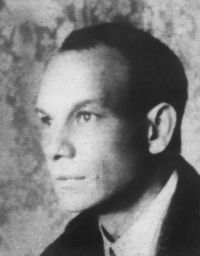
H. M. Tomlinson
Summary
H. M. Tomlinson’s London River (1913) examines the Thames as a liminal space where industrial London intersects with the enigmatic forces of nature and destiny. Centering on docklands, steamers, and the work of skippers such as Pascoe and Macandrew, the text weaves together themes of maritime danger, existential contemplation, and the contrast between urban resilience and ethereal beauty.
Through rich depictions of clippers, trawlers, and the river’s ever-changing temperament, Tomlinson conjures a world in which the ordinary and the arcane merge, portraying the Thames not only as a vital artery of trade but also as a gateway to concealed dimensions of human effort and ambiguity.
Quotes from London River (H. M. Tomlinson)
“ A leisurely wisp of steam rises from a steamer's funnel. She is alive and breathing, though motionless. The walls enclosing the Pool are spectral in a winter light, and might be no more than the almost forgotten memory of a dark past. Looking at them intently, to give them a name, the wayfarer on the bridge could imagine they were maintained there only by the frail effort of his will. Once they were, but now, in some moods, they are merely remembered. Only the men busy on the deck of the ship below are real. ”
“ The Windhover, being free, I suppose, began to dance. The sun came up. The seas were on the march. Just behind us was London, asleep and unsuspecting under the brown depression of its canopy; and as to this surprise of light and space so near to that city, so easily entered, yet for so long merely an ancient rumour, an old tale of our streets to which the ships and the wharves gave credence—how shall the report of it sound true? Not at all, except to those who still hold to a faith, through all foul times, in the chance hints of a better world. ”
