Speed

Definition and stakes

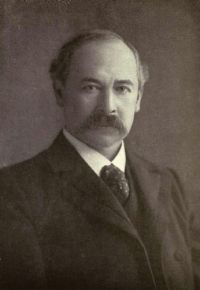
Portrait of William Whewell William Whewell Astronomy and General Physics Considered with Reference to Natural Theology

We may call the velocity, that is the speed of a body, its motion; but we cannot, by giving it this name, make it a thing which has any à priori claim to permanence, much less any self-evident constancy. Why must the speed of a body, left to itself, continue the same, any more than its temperature? Hot bodies grow cooler of themselves, why should not quick bodies go slower of themselves? Why must a body describe one thousand feet in the next second because it has described one thousand feet in the last?
Source: Gutenberg

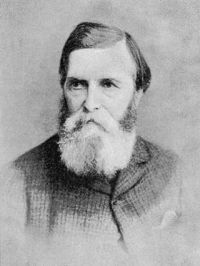
Portrait of Robert S. Ball Robert S. Ball The Earth's Beginning

If a body were moving at the rate of, let us say, 100 miles a second—its speed being then twenty times as great as the particular speed just mentioned—its energy, which depends on the square of the velocity, would be 400 times as much as would be produced by the burning of a piece of coal equal to it in weight.
Source: Gutenberg

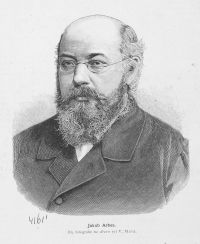
Portrait of Julia McNair Wright Julia McNair Wright Nature readers (1891)

An engine running thirty miles an hour, without once slacking speed, could go around our globe in thirty-five days. Start it off for a trip to the moon, and with the same speed it would reach there in eleven months. And then send it from the earth to the sun, at an equal rate of travel: year after year it must rush on, until three hundred and fifty-one years were passed before it could reach the sun. But so much faster does light travel than a railroad train, that light comes to us from the sun in eight minutes and nineteen seconds!
Source: Gutenberg

Get perspective with Kwize: daily news enlightened by great literature