Aerial photography

Definition and stakes

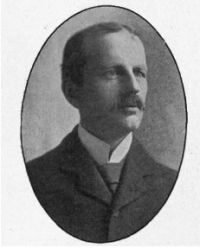
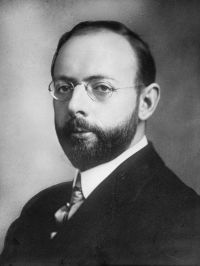
Portrait of Herbert Eugene Ives Herbert Eugene Ives,  Airplane Photography

“ Before the advent of aerial photography little attention was paid to speed uniformity, differences of 50 per cent. in initial and final speed being common in focal-plane shutters, and but little noticed in ordinary landscape work because of the natural variation of brightness from sky to ground. In the making of aerial mosaic maps the non-uniformity of density across the plate results in a most offensive series of abrupt changes of tone at the junction points of the successive prints (Fig. 140) , an effect which must be minimized by manipulation of the printing light. ”
Source: Gutenberg

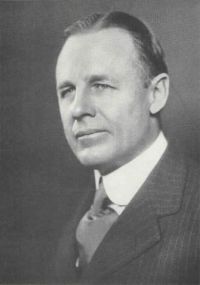
Portrait of Herbert Eugene Ives Herbert Eugene Ives,  Airplane Photography

“ In conclusion it may be pointed out that the endeavor in ordinary orthochromatic photography—to reproduce the visual brightness of colors in the photographic print—has no real justification in aerial work. Neither in respect to color values nor in respect to brightness range is it the object of aerial photography, especially for war purposes, to present a truthful tone reproduction. ”
Source: Gutenberg

Portrait of Herbert Eugene Ives Herbert Eugene Ives,  Airplane Photography

“ The French, therefore, almost from the start, built their cameras with lenses of long focus, and made contact prints from their negatives.
Practices adopted under pressure of an emergency to meet temporary practical limitations often come to dominate the whole situation. This is particularly true of aerial photography in the British and American services. The small apparatus built around the stop-gap short focus lenses 46fixed the plane designer's idea of an airplane camera, and the space it should occupy.
”
Source: Gutenberg

Get perspective with Kwize: daily news enlightened by great literature