Meter

Definition and stakes

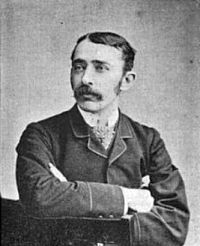
Portrait of John Ambrose Fleming John Ambrose Fleming,  1911 Encyclopædia Britannica, Volume 18… (1911)

“ In those meters which are compounded—that is, have a shunt coil wound on the field magnets to compensate for the friction of the train—it is important to notice whether the meter will operate or continue operating when there is no current in the series coil, since a meter which “runs on the shunt” runs up a debt against the consumer for which it gives no corresponding advantage. ”
Source: Wikisource

Portrait of John Ambrose Fleming John Ambrose Fleming,  1911 Encyclopædia Britannica, Volume 18… (1911)

“ When this is the case, the number of revolutions of the meter in a given time is a measure of the watt-hours or energy which is passed through the meter. The counting mechanism and dials may be so, arranged as to indicate this energy directly in watt-hours. The meter is made up also in a form suitable for use with two or three fixed electric currents. ”
Source: Wikisource

Jacques Wardlaw Redway,  Handbook of Meteorology — Appendix (1921)

“ The construction and evolution of the system of electrical units now in general use began in Europe where the metric system originated. Two of the basic units, the centimeter and the gram, are metric units; the second of time is universally employed in time measurements.
The meter, 3.2808 feet = 39.37 inches, is theoretically the one ten-millionth part of the earth’s quadrant
”
Source: Wikisource

Get perspective with Kwize: daily news enlightened by great literature