 Laurence Sterne,
A Sentimental Journey Through France and Italy
Laurence Sterne,
A Sentimental Journey Through France and Italy
“ I am positive I have a soul; nor can all the books with which materialists have pester’d the world ever convince me to the contrary. ”
Laurence Sterne,
A Sentimental Journey Through France and Italy
“ I am positive I have a soul; nor can all the books with which materialists have pester’d the world ever convince me to the contrary. ”
 Auguste Comte,
A General View of Positivism
Auguste Comte,
A General View of Positivism
“ Were the influence of social feeling to be slackened, the Positive spirit would soon fall back to the subjects which were preferred during the period of its infancy; subjects the most remote from human interest, and therefore also the easiest. ”
Auguste Comte,
A General View of Positivism
“ It will soon become generally accepted, and the word Positive will be understood to mean relative as much as it now means organic, precise, certain, useful, and real. Thus the highest attributes of human wisdom have, with one exception, been gradually condensed into a single expressive term. ”
Auguste Comte,
A General View of Positivism
“ All must now acknowledge that the Positive spirit tends necessarily towards the formation of a comprehensive and durable system, in which every practical as well as speculative subject shall be included. ”
 James Clerk Maxwell,
A Treatise on Electricity and Magnetism
(1873)
James Clerk Maxwell,
A Treatise on Electricity and Magnetism
(1873)
“ Hence, if at any part of the surface of the sphere is positive, there must be some other part of the surface where it is negative, and if the body be displaced in a direction in which is negative, it will tend to move from its original position, and its equilibrium is therefore necessarily unstable. ”
James Clerk Maxwell,
A Treatise on Electricity and Magnetism
(1873)
“ II. When one body electrifies another by conduction, the total electrification of the two bodies remains the same, that is, the one loses as much positive or gains as much negative electrification as the other gains of positive or loses of negative electrification. ”
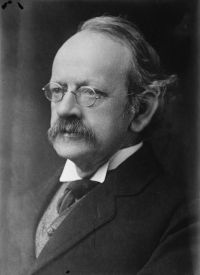 Joseph John Thomson,
Rays of Positive Electricity and Their Application to Chemical Analyses…
(1913)
Joseph John Thomson,
Rays of Positive Electricity and Their Application to Chemical Analyses…
(1913)
“ The circumstances are very unfavourable for a particle in the positive rays to get a negative charge, and we must not conclude that because an atom or molecule has not been observed to acquire a negative charge when in the positive rays it is incapable of doing so under more favourable circumstances. ”
 John Ruskin,
The Pleasures of England
John Ruskin,
The Pleasures of England
“ Thee I implore, O Lord, who art the highest wisdom. Through Thee are wise all those that are so. Thou art the true life, and through Thee are living all those that are so. Thou art the supreme felicity, and from Thee all have become happy that are so. Thou art the highest good, and from Thee all beauty springs. Thou art the intellectual light, and from Thee man derives his understanding. ”
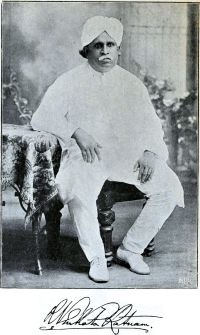 Raghupathi Venkataratnam Naidu,
The Message and Ministrations of Dewan Bahadur R. Venkata Ratnam
(1923)
Raghupathi Venkataratnam Naidu,
The Message and Ministrations of Dewan Bahadur R. Venkata Ratnam
(1923)
“ Thou art the main-spring, the vital secret, the fountain-source, of our existence. What is life but a genial current of joy and grace that wells up incessantly from Thy centred self? Thou art the life, the inner vitality, of our senses. ”
 Frances Wright,
A few days in Athens
(1850)
Frances Wright,
A few days in Athens
(1850)
“ Is it to seek happiness, or to seek virtue and knowledge?—Attend, and I will show you that in finding one, you shall find the three. To be happy, we must be virtuous; and when we are virtuous, we are wise. Let us then begin: and first, let us for awhile hush our passions into slumber, forget our prejudices, and cast away our vanity and our pride. Thus patient and modest, let us come to the feet of Philosophy; let us say to her, ‘Behold us, scholars and children, gifted by nature with faculties, affections, and passions.—Teach us their use, and their guidance. ”
 William Wordsworth,
Poems
(1815)
William Wordsworth,
Poems
(1815)
“ Whose life combines the best of high and low, The toiling many and the resting few; Health, quiet, meekness, ardour, hope secure, And industry of body and of mind; And elegant enjoyments, that are pure As Nature is;—too pure to be refined. ”
Adam Ferguson, An Essay on the History of Civil Society…
“ This is, perhaps, the foundation, on which, without the aid of reflection, the contented and the cheerful have rested the gaiety of their tempers. It is, perhaps, the most solid basis of fortitude which any reflection can lay; and happiness itself is secured by making a certain species of conduct our amusements; and, by considering life in the general estimate of its value, as well on every particular occasion, as a mere scene for the exercise of the mind, and the engagements of the heart. ”
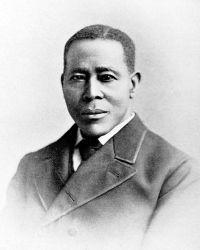 William Still,
The Underground Railroad
William Still,
The Underground Railroad
“ Kindness and warm affection, clearness of moral vision, and purity of heart, with a lively relish for quiet intellectual pleasures, for society and books adapted to refine, improve and elevate, were among the characteristics common to them all. ”
 Anthony Hope,
The King's Mirror
(1899)
Anthony Hope,
The King's Mirror
(1899)
“ There is a quality which is the sign and soul of high and genuine pleasure, whether of mind or body, of sight, feeling, or imagination; I mean spontaneity. This characteristic, with its included incidents of unexpectedness, of suddenness, often of unwisdom and too entire absorption in the moment, comes, I take it, from a natural agreement of what you are with what you do, not planned or made, but revealed all at once and full-grown; when the heart finds it, it knows that it is satisfied. ”
 Ralph Waldo Emerson,
Essays — First Series
Ralph Waldo Emerson,
Essays — First Series
“ The good soul nourishes me and unlocks new magazines of power and enjoyment to me every day. I will not meanly decline the immensity of good, because I have heard that it has come to others in another shape. Besides, why should we be cowed by the name of Action? ’Tis a trick of the senses,—no more. We know that the ancestor of every action is a thought. ”
Thomas More, Utopia (1901) — Chapter 6: Of the Travelling of the Utopians (1901)
“ They reckon up several sorts of pleasures, which they call true ones; some belong to the body, and others to the mind. The pleasures of the mind lie in knowledge, and in that delight which the contemplation of truth carries with it; to which they add the joyful reflections on a well- spent life, and the assured hopes of a future happiness. ”
 John Stuart Mill,
Autobiography (Mill) — Chapter V. 1826-1832
(1874)
John Stuart Mill,
Autobiography (Mill) — Chapter V. 1826-1832
(1874)
“ All those to whom I looked up, were of opinion that the pleasure of sympathy with human beings, and the feelings which made the good of others, and especially of mankind on a large scale, the object of existence, were the greatest and surest sources of happiness. ”
 George William Curtis,
From the Easy Chair, Volume 2
George William Curtis,
From the Easy Chair, Volume 2
“ The mingled strength and simplicity and sweetness of his nature, the lofty sense of justice, the tranquil and complete devotion to duty, the large and humane sympathy, not lost in vague philanthropic feeling, but mindful of every detail of relief—the sound and steady judgment, the noble independence of thought and perfect courage of conviction, the blended manliness and modesty of a life which was unstained, and of a character which seemed without a flaw, all belonged to what we call the ideal man. ”
 John Gregory,
A Father's Legacy to his Daughters…
(1808)
John Gregory,
A Father's Legacy to his Daughters…
(1808)
“ If you have any sensibility or imagination, this will establish such an intercourse between you and the Supreme Being, as will be of infinite consequence to you in life. It will communicate an habitual cheerfulness to your tempers, give a firmness and steadiness to your virtue, and enable you to go through all the vicissitudes of human life with propriety and dignity. ”
Edmund Morris, Ten Acres Enough
“ How different the path I travelled from that in which ambition hurries forward—too narrow for friendship, too crooked for love, too rugged for honesty, and too dark for science! Thus, if we choose, we may sandwich in the poetry with the prose of life. Thus, many a dainty happiness and relishing enjoyment may come between the slices of every-day work, if we only so determine. ”
Wilhelmina Stitch, Silver linings (1928)
“ Accept your limits with good grace; the world is varied, very wide; for each of us there is a place. Within your sphere be quite content, be proud of work that is your own, and to life's complex instrument with sweetness add your mite of tone. ”
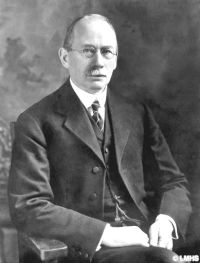 Rufus M. Jones,
Spiritual Reformers in the 16th & 17th Centuries
Rufus M. Jones,
Spiritual Reformers in the 16th & 17th Centuries
“ The seventh, and final, "quality" is body or figure, by which he means the fundamental tendency or energy toward expression in actuality and concrete form. The final goal of intelligent purpose is the realization of wisdom, of idea, in actual Nature-forms and life-forms—the incarnation of the spirit. ”
Josiah Hotchkiss Gilbert, Three Thousand Selected Quotations from Brilliant Writers… (1909)
“ What gain is it to please the world, to please the great, nay, even to please those whom we love, compared with this? What gain is it to be applauded, admired, courted, followed,—compared with this one aim of "not being disobedient to the heavenly vision?" ”
 Henry Sidgwick,
The Methods of Ethics
Henry Sidgwick,
The Methods of Ethics
“ We can make a list of sources of happiness apparently recommended by an overwhelming consensus of current opinion: as health, wealth, friendship and family affections, fame and social position, power, interesting and congenial occupation and amusement,—including the gratification, in some form, of the love of knowledge, and of those refined, partly sensual, partly emotional, susceptibilities which we call æsthetic. ”
Olive Higgins Prouty, The Fifth Wheel (1916)
“ With what grace, intelligence, and appreciation of values would you move among the other monitors of great fortunes, admired by them, praised, and loved, I think. What a factor for good you could become! ”
 Jacob Merlo Horstius,
The paradise of the Christian soul
(1877)
Jacob Merlo Horstius,
The paradise of the Christian soul
(1877)
“ On such occasions I say from my heart, I rejoice, and give thee joy for thy infinite perfections, — that thou art who art, a God supremely powerful, wise, good, merciful, just, &c., the supreme good of the rational creature; that thou needest nothing, for thou art happy enough in thyself, and sufficient for thyself, while all our sufficiency is from thee. ”
Eveleen Laura Mason, An episode in the doings of the dualized (1898)
“ I repeat it, I distinctly believe this elusive, thrilling gladness-element of mind and nerve, is the joy-power, the intellectual vigor of that Vital One, the being whom we call God; who is the breath of our lives, and of whom we are competent to know more and more eternally. ”
 Grace S. Richmond,
The Twenty-Fourth of June: Midsummer's Day
Grace S. Richmond,
The Twenty-Fourth of June: Midsummer's Day
“ The combination I am trying to describe as impossibly desirable is that not only of beauty and goodness—I suppose there are really many who have those; but—goodness and fascination! That's what a man wants. ”
Mrs. A. T. Thomson, The life and times of George Villiers…
“ Great delicacy in the development of character, and a subtle power of self-analysis are conspicuous in ‘A Life for a Life,‘ while the purity of its religious views, and the elevation--the grandeur, indeed--of its dominating sentiments, render its influences in every sense healthy and invigorating."--The Press. ”
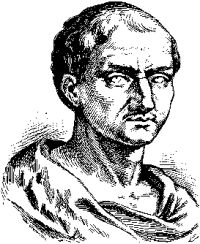 Anicius Manlius Severinus Boethius,
The Consolation of Philosophy
(1897)
Anicius Manlius Severinus Boethius,
The Consolation of Philosophy
(1897)
“ For strength and stature surely manifest power; beauty and fleetness of foot bring celebrity; health brings pleasure. It is plain, then, that the only object sought for in all these ways is happiness. For that which each seeks in preference to all else, that is in his judgment the supreme good. And we have defined the supreme good to be happiness. ”
R. S. Warren Bell, Marie Corelli: The Writer and the Woman
“ To your society, which has done so much good already, which is doing so much good, and will continue to do so much good, I would say, if I may be permitted to offer any advice: Cultivate among yourselves a spirit of cheerfulness, light-heartedness, and content, which shall spread the influence of moral and mental sunshine all through this dear little town in which you dwell. ”
 F. H. Bradley,
Ethical Studies — Essay VII.
(1876)
F. H. Bradley,
Ethical Studies — Essay VII.
(1876)
“ The reasoning we have developed rests, in a word, on the confusion between a pleasant thought and the thought of a pleasure; between an idea of an objective act or event, contemplation of which is pleasant, and of which I desire the realization, and the idea of myself as the subject of a feeling of satisfaction which is to be. ”
 Donald Grant Mitchell,
Dream Life: A Fable of the Seasons
Donald Grant Mitchell,
Dream Life: A Fable of the Seasons
“ And yet in the view of those sweet scenes which belonged to early days, when neither strength, confidence, nor wealth were yours,—days never to come again,—a shade of melancholy broods upon your spirit, and covers with its veil all that fierce pride which your worldly wisdom has wrought. ”
 Algernon Blackwood,
Picking Fir-Cones
(1924)
Algernon Blackwood,
Picking Fir-Cones
(1924)
“ Joy was the quality that no one had—that joy, as I knew later, which is the essential quality of wisdom. The surprise, the unearthly touch, of wisdom, are mothered always by this towering sense of joy. ”
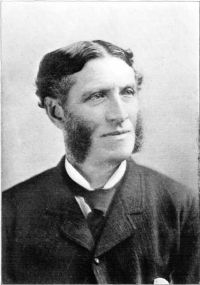 Matthew Arnold,
Culture and Anarchy — Chapter I: Sweetness and Light
(1882)
Matthew Arnold,
Culture and Anarchy — Chapter I: Sweetness and Light
(1882)
“ It places it in the ever-increasing efficacy and in the general harmonious expansion of those gifts of thought and feeling, which make the peculiar dignity, wealth, and happiness of human nature. As I have said on a former occasion: 'It is in making endless additions to itself, in the endless expansion of its powers, in endless growth in wisdom and beauty, that the spirit of the human race finds its ideal. ”
 Georg Ebers,
The Bride of the Nile — Complete
Georg Ebers,
The Bride of the Nile — Complete
“ The isolated and charmless existence you drag through here, to the satisfaction of none and least of all to your own, you can transform to one of fruition and satisfaction—breathing and moving healthily and beneficently in the light of day. ”
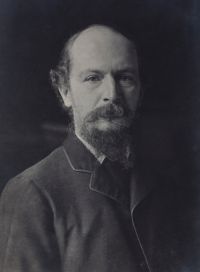 Algernon Charles Swinburne,
A Study of Victor Hugo
(1886)
Algernon Charles Swinburne,
A Study of Victor Hugo
(1886)
“ From the crudest impressions of the boy to the ripest convictions of the man, one common quality informs and harmonizes every stage of thought, every phase of feeling, every change of spiritual outlook, which has left its mark on the writings of which that collection is composed; the quality of a pure, a perfect, an intense and burning sincerity. ”
 John of the Cross,
Ascent of Mount Carmel
John of the Cross,
Ascent of Mount Carmel
“ We have next to treat of rejoicing with respect to the good things of sense, which is the third kind of good thing wherein we said that the will may rejoice. And it is to be noted that by the good things of sense we here understand everything in this life that can be apprehended by the senses of sight, hearing, smell, taste or touch, and by the interior fashioning of imaginary reflections, all of which things belong to the bodily senses, interior and exterior. ”
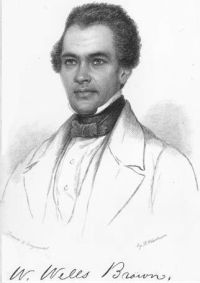 William Wells Brown,
Clotel; Or, The President's Daughter
William Wells Brown,
Clotel; Or, The President's Daughter
“ It gives scope for every human virtue, since each of these is developed from the love and confidence which here predominate. It unites all which ennobles and beautifies life,—sympathy, kindness of will and deed, gratitude, devotion, and every delicate, intimate feeling. ”
 Orison Swett Marden,
How to Succeed; Or, Stepping-Stones to Fame and Fortune
Orison Swett Marden,
How to Succeed; Or, Stepping-Stones to Fame and Fortune
“ By constantly looking on the bright side of things, by viewing everything hopefully, by setting the face as a flint every hour of every day toward all that is harmonious and beautiful in life, and refusing to listen to the discord or to look at the ugly side of life, by constantly directing the thought toward what is noble, grand and true, we can soon form habits which will develop into a beautiful character, a harmonious and well-rounded life. ”
 William Edward Hartpole Lecky,
The Map of Life
William Edward Hartpole Lecky,
The Map of Life
“ It is eminently a pleasure which is not only good in itself but enhances many others. By extending the range of our knowledge, by enlarging our powers of sympathy and [Pg 243] appreciation, it adds incalculably to the pleasures of society, to the pleasures of travel, to the pleasures of art, to the interest we take in the vast variety of events which form the great world-drama around us. ”
Auguste Comte,
A General View of Positivism
“ We see in them every kind of beauty combined; beauty of mind and character as well as of person. All their actions, even those which are unconscious, exhibit a spontaneous striving for ideal perfection. ”
Diana Fontaine Maury Corbin, A Life of Matthew Fontaine Maury (1888)
“ They give grace and confer happiness, far more than pearls or precious stones. Cultivate day by day pleasantness of manner. Let us analyse it Of what, or in what does pleasantness of manner consist? That trait which gives elegance and grace to woman, comeliness, and the power of doing good. ”
William Shuler Harris, Life in a Thousand Worlds (1905)
“ Here I saw, in wide contrast to our own social order, the results springing from sincerity that has thrived through a long line of generations. Such blessings are as a breath of Heaven, rare and beautiful. ”
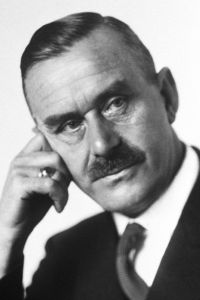 Thomas Mann,
Royal Highness
(1916)
Thomas Mann,
Royal Highness
(1916)
“ But quite apart from all actual greatness and high-calling, there is always what I call Highness, select and sadly isolated forms of life, towards which an attitude of the tenderest sympathy should be adopted. ”
 James Lane Allen,
Out from the heart
(1900)
James Lane Allen,
Out from the heart
(1900)
“ When the Virtue of Rectitude is fully practised, acquired, and comprehended, so that all temptation to untruthfulness and insincerity has ceased, then is the heart made purer and nobler, then is character strengthened, and knowledge enlarged, and life takes on a new meaning and a new power. ”
Gilbert Norwood, Greek tragedy (1920)
“ Genius, good health, industry, long life, personal beauty, affluence, popularity, and the sense of power—all were his, and enjoyed in that very epoch which, beyond all others, seems to have combined stimulus with satisfaction. ”
Lord Henry Home Kames, Elements of Criticism, Volume I
“ The pleasures of regularity, propriety, convenience, compose the emotion raised by a fine building.If external properties make a being or thing agreeable, we have reason to expect the same effect from those which are internal; and accordingly power, discernment,{48} wit, mildness, sympathy, courage, benevolence, render the possessor agreeable in a high degree. So soon as these qualities are perceived in any person, we instantaneously feel pleasant emotions, without the slightest act of reflection or of attention to consequences. ”
