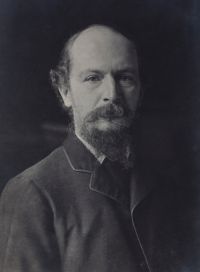
Algernon Charles Swinburne

Algernon Charles Swinburne

Summary

Portrait of Algernon Charles Swinburne Algernon Charles Swinburne A Study of Victor Hugo (1886)

A yet sweeter and sadder and more magical sea-song there was yet to come years after—but only from the lips of an exile. Of the ballad—so to call it, if any term of definition may suffice—which stands out as a crowning splendour among Les Rayons et les Ombres, not even Hugo's own eloquence, had it been the work (which is impossible) of any other great poet in all time, could have said anything adequate at all. Not even Coleridge and Shelley, the sole twin sovereigns of English lyric poetry, could have produced this little piece of lyric work by combination and by fusion of their gifts.
Source: Wikisource

Portrait of Algernon Charles Swinburne Algernon Charles Swinburne A Study of Victor Hugo (1886)

To none of us, we must think, can the children of a great poet's divine imagination seem dearer or more deserving of mercy than they seemed to their creator: but when poetry demands their immolation, they must die, that they may live for ever.
Once more, but now for the last time, the world was to receive yet another gift from the living hand of the greatest man it had seen since Shakespeare. Towards the close of his eighty-second year he bestowed on us the crowning volume of his crowning work, the imperishable and inappreciable Légende des Siècles.
Source: Wikisource

Portrait of Algernon Charles Swinburne Algernon Charles Swinburne A Study of Victor Hugo (1886)

There is nothing in Homer, in Dante, or in Shakespeare, the three only poets who can properly be cited for comparison, of a pathos more poignant in its bitter perfection of sweetness.
Among the many good things which seem, for the lovers of poetry, to have come out of one and so great an evil as the long exile of Hugo from his country, there is none better or greater than the spiritual inhalation of breeze and brine into the very heart of his genius, the miraculous impregnation of his solitary Muse by the sea-wind.
Source: Wikisource

Get perspective with Kwize: daily news enlightened by great literature