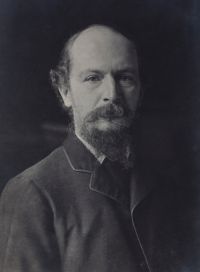
Algernon Charles Swinburne

Algernon Charles Swinburne

Summary

Portrait of Algernon Charles Swinburne Algernon Charles Swinburne Victor Hugo

There is nothing in Homer, in Dante, or in Shakespeare, the three only poets who can properly be cited for comparison, of a pathos more poignant in its bitter perfection of sweetness.
Among the many good things which seem, for the lovers of poetry, to have come out of one and so great an evil as the long exile of Hugo from his country, there is none better or greater than the spiritual inhalation of breeze and brine into the very heart of his genius, the miraculous impregnation of his solitary Muse by the sea-wind.
Source: Gutenberg

Portrait of Algernon Charles Swinburne Algernon Charles Swinburne Victor Hugo

No newer doctrine, no sounder philosophy, no riper wisdom than this, can be gathered from the declamations of those idle old men—as Goneril, for example, would have called them—who speak this poet's mind again and again in verse which has no more variety of splendor or magnificence of music than the sea.
Hélas, on voit encor les astres se lever,
L'aube sur l'Apennin jeter sa clarté douce,
L'oiseau faire son nid avec des brins de mousse,
La mer battre les rocs dans ses flux et reflux,
Mais la grandeur des cœurs c'est ce qu'on ne voit plus.
Source: Gutenberg

Portrait of Algernon Charles Swinburne Algernon Charles Swinburne Victor Hugo

His burning wrath and scorn unquenchable were fed with light and heat from the inexhaustible dayspring of his love—a fountain of everlasting and unconsuming fire. We know of no such great poet so good, of no such good man so great in genius: not though Milton and Shelley, our greatest lyric singer and our single epic poet, remain with us for signs and examples of devotion as heroic and self-sacrifice as pure.
Source: Gutenberg

Get perspective with Kwize: daily news enlightened by great literature