Notre-Dame de Paris

Definition and stakes

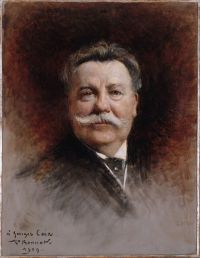
Portrait of Victor Hugo Victor Hugo Notre-Dame de Paris

The men, the architects, the artists of our day.
And if we enter the interior of the edifice, who has overthrown that colossus of Saint Christopher, proverbial for magnitude among statues, as the grand hall of the Palais de Justice was among halls, as the spire of Strasbourg among spires? And those myriads of statues, which peopled all the spaces between the columns of the nave and the choir, kneeling, standing, equestrian, men, women, children, kings, bishops, gendarmes, in stone, in marble, in gold, in silver, in copper, in wax even,—who has brutally swept them away? It is not time.
Source: Gutenberg

Portrait of Victor Hugo Victor Hugo Notre-Dame de Paris (1888)

Time has caused the staircase to disappear, by raising the soil of the city with a slow and irresistible progress; but while thus causing the eleven steps which added to the majestic height of the edifice, to be devoured, one by one, by the rising tide of the pavements of Paris,— time has bestowed upon the church perhaps more than it has taken away, for it is time which has spread over the façade that sombre hue of the centuries which makes the old age of monuments the period of their beauty.
Source: Wikisource

Portrait of Victor Hugo Victor Hugo Notre-Dame de Paris

All Paris lay at his feet, with the thousand spires of its edifices and its circular horizon of gentle hills—with its river winding under its bridges, and its people moving to and fro through its streets,—with the clouds of its smoke,—with the mountainous chain of its roofs which presses Notre-Dame in its doubled folds; but out of all the city, the archdeacon gazed at one corner only of the pavement, the Place du Parvis; in all that throng at but one figure,—the gypsy.
Source: Gutenberg

Get perspective with Kwize: daily news enlightened by great literature