Gothic architecture

Definition and stakes

James J. Walsh,  The Thirteenth, Greatest of Centuries

“ Those who think that the Gothic architecture came to a perfection all its own by a sort of wonderful manifestation of genius in a single generation, and then stayed there, are sadly mistaken. There was a constant development to be noted all during the Thirteenth Century. This development was always in the line of true improvement, while just after the century closed degeneration began, decoration became too important a consideration, parts were over-loaded with ornament, and the decadence of taste in Gothic architecture cannot escape the eye even of the most untutored. ”

Source: Gutenberg

Sir George Gilbert Scott,  Lectures on the rise and development of medieval architecture…

“ It would be unjust to father the contemptible and endless fallacies of our own day upon Classic architecture. It is true that they pervade and saturate many of the modern productions of that style, and that the revival of Gothic architecture has somehow led to their exposure; but the truthfulness which we are proud to claim as one of its great and leading stars, we freely yield as the property, not of one style, but of all noble architecture. ”
Source: Gutenberg

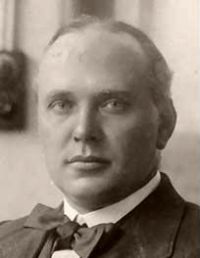
Portrait of A. D. F. Hamlin A. D. F. Hamlin,  A Text-Book of the History of Architecture

“ The excellence of Gothic architecture lay not so much in its individual details as in its perfect adaptation to the purposes for which it was developed—its triumphs were achieved in the building of cathedrals and large churches. In the domain of civil and domestic architecture it produced nothing comparable with its ecclesiastical edifices, because it was the requirements of the cathedral and not of the palace, town-hall, or dwelling, that gave it its form and character. ”
Source: Gutenberg

Get perspective with Kwize: daily news enlightened by great literature