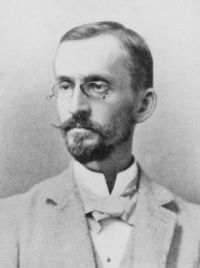
A. D. F. Hamlin

Biographical details

Portrait of A. D. F. Hamlin A. D. F. Hamlin A Text-Book of the History of Architecture

We may, then, define architecture as the art which seeks to harmonize in a building the requirements of utility and of beauty. It is the most useful of the fine arts and the noblest of the useful arts. It touches the life of man at every point. It is concerned not only in sheltering his person and ministering to his comfort, but also in providing him with places for worship, amusement, and business; with tombs, memorials, embellishments for his cities, and other structures for the varied needs of a complex civilization.
Source: Gutenberg

Portrait of A. D. F. Hamlin A. D. F. Hamlin The Brochure Series of Architectural Illustration…

The style which he made his own, and which was then at the height of popular favor, borne on the wave of admiration for the real strength and originality of his works, has waned, as all fashions must wane which are not the result of a spontaneous movement of taste, but ride into favor on the back of some passing whim or on the merit of the achievements of some one person or coterie. No architectural period can be truly great that depends upon one man or set of men for its great works.
Source: Gutenberg

Portrait of A. D. F. Hamlin A. D. F. Hamlin A Text-Book of the History of Architecture

Not less remarkable than the noble planning and construction of this church was the treatment of scale and decoration in its interior design. It was as conspicuously the masterpiece of Byzantine architecture as the Parthenon was of the classic Greek. With little external beauty, it is internally one of the most perfectly composed and beautifully decorated halls of worship ever erected. Instead of the simplicity of the Pantheon it displays the complexity of an organism of admirably related parts.
Source: Gutenberg

Get perspective with Kwize: daily news enlightened by great literature