Summary

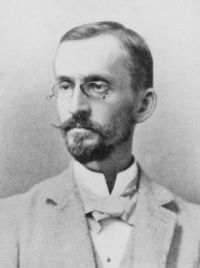
Portrait of A. D. F. Hamlin A. D. F. Hamlin A Text-Book of the History of Architecture

We may, then, define architecture as the art which seeks to harmonize in a building the requirements of utility and of beauty. It is the most useful of the fine arts and the noblest of the useful arts. It touches the life of man at every point. It is concerned not only in sheltering his person and ministering to his comfort, but also in providing him with places for worship, amusement, and business; with tombs, memorials, embellishments for his cities, and other structures for the varied needs of a complex civilization.
Source: Gutenberg

Portrait of A. D. F. Hamlin A. D. F. Hamlin A Text-Book of the History of Architecture

Not less remarkable than the noble planning and construction of this church was the treatment of scale and decoration in its interior design. It was as conspicuously the masterpiece of Byzantine architecture as the Parthenon was of the classic Greek. With little external beauty, it is internally one of the most perfectly composed and beautifully decorated halls of worship ever erected. Instead of the simplicity of the Pantheon it displays the complexity of an organism of admirably related parts.
Source: Gutenberg

Portrait of A. D. F. Hamlin A. D. F. Hamlin A Text-Book of the History of Architecture

Never, perhaps, since the days of Pericles, had there been another community so permeated with the love of beauty in art, and so endowed with the capacity to realize it. Nowhere else in Europe at that time was there such strenuous life, such intense feeling, or such free course for individual genius as in Florence. Her artists, with unexampled versatility, addressed themselves with equal success to goldsmiths’ work, sculpture, architecture and engineering—often to painting and poetry as well
Source: Gutenberg

Get perspective with Kwize: daily news enlightened by great literature