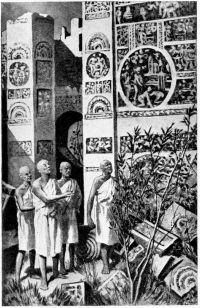
A palace, historically a grand residence for royalty or high dignitaries, embodies power, luxury, and cultural significance. From the Minoan palaces of Crete to the imperial residences of Rome, it has functioned as both a center of governance and a symbol of prestige. Authors like Justin H. McCarthy evoke its romanticized grandeur, while John S.
C. Abbott contrasts its splendor with the burdens borne by its inhabitants. L. D. Biagi, meanwhile, transforms it into a fantastical realm. These varied portrayals highlight the palace’s dual role as a physical structure and a metaphor for authority, its design reflecting the values and aspirations of the societies that constructed it.
 Justin H. McCarthy,
If I Were King