AI-generated from sources
The Monument and The Museum, The Enduring Tension in Public Architecture
In Brief
- The Louvre's evolution from a royal palace to a public museum exemplifies a societal shift from autocratic display to democratic access.
- Public architecture inherently balances symbolic grandeur—evoking powerful emotions—with practical utility and economic considerations.
- For museums, successful architectural design must prioritize the preservation, exhibition, and interpretation of collections over monumental aesthetics, serving the public mission.
- The purpose and design of public edifices reflect a society's political evolution and collective ideals.
Main authors


Major public edifices stand as physical manifestations of a society's values, embodying a persistent tension between the desire for symbolic grandeur and the demands of practical function. This conflict is particularly evident in the evolution of national museums, which are tasked with being both awe-inspiring monuments and accessible public institutions. The Louvre serves as a quintessential example of this duality. Its history is a chronicle of transformation from a seat of monarchical power, intended to project authority and splendor, into a democratic space dedicated to the preservation and exhibition of cultural heritage for all citizens [4, 5]. The building's very stones are layered with these competing ideologies, reflecting a continuous negotiation between architecture as a statement of power and as a vessel for public service.
The origins of the Louvre are rooted in royal and later imperial ambition, with successive rulers expanding its structure as a testament to their reigns [10]. This legacy of grandeur created an edifice that, for some observers, was more impressive than the collections it housed, a magnificent shell that could overshadow its cultural kernel [2]. The conversion of this royal palace into a public museum marked a profound ideological shift, repurposing a symbol of autocratic power for the purposes of national education and democratic access [7]. Yet, this transition did not erase the building's monumental character. It instead created a lasting tension between the structure's form, born of conquest and prestige, and its modern function as an institution dedicated to serving a broad public [3, 12].
The Louvre, From Royal Palace to National Symbol
The architectural history of the Louvre mirrors the political aspirations of France's rulers. From its medieval foundations, the palace underwent significant transformations under monarchs like Francis I, who infused it with a more refined and ambitious aesthetic . It was consistently treated as a project of national importance, though its completion was often neglected by kings who preferred to build their luxurious courts away from the capital's public gaze . Napoleon, however, envisioned the palace as a central element of his legacy, planning for its expansion and asserting its primacy over other Parisian palaces [6]. This long history of development established the Louvre as a foremost symbol of state power, with each generation of leaders seeking to add to its monumental scale.
The Napoleonic period marked a decisive turning point in the Louvre's function. Napoleon systematically repurposed the palace, removing the artists who had been granted residence there and dedicating it exclusively as a national repository for art treasures . This transformation was fueled by military campaigns across Europe, with a commission led by Baron Denon selecting the finest works of art from conquered territories to be sent to Paris . This policy was a deliberate act of cultural appropriation, designed to establish France, and the Louvre specifically, as the undisputed center of the art world . The museum's collections thus became a direct symbol of imperial victory and cultural dominance.
Beyond the art it contained, the architectural form of the Louvre itself projected immense symbolic power. During the Second Empire, the New Louvre was acclaimed internationally as a pinnacle of cosmopolitan modernity, its style widely emulated in grand hotels and public buildings from North America to Europe [1]. This influence supports the view, articulated by theorist Roger Fry, that opulent buildings and the rare objects they house serve as a kind of "symbolic currency," signifying national greatness and commercial power [11]. For some 19th-century visitors like Nathaniel Hawthorne, the sheer magnificence of the structure was its most striking feature, an imposing symbol of autocratic policy whose costs were borne by the people .
The Louvre's transition into a public institution began in earnest during the French Revolution, when its galleries were first opened to the citizenry, predating Napoleon's grand reorganization . This shift from a royal domain to a democratic museum represented a fundamental redefinition of the building's purpose . The explicit goal was to use the assembled masterpieces as an educational tool to dispel bad taste and guide the aesthetic development of the nation [8]. Despite this mission of public uplift, the museum's success in engaging the populace remained a subject of debate. Well into the 20th century, observers noted that despite its priceless collections and historical significance, the institution was sometimes met with public indifference, even on days when admission was free [9].
Grandeur and Utility, A Perennial Architectural Conflict
Public architecture is a field defined by a foundational conflict between the pursuit of inspiring grandeur and the necessities of practical utility. The 18th-century thinker Lord Henry Home Kames identified grandeur as the most powerful emotion a building could evoke, making it a chief objective for any architect working on a large scale [17]. He simultaneously recognized a paradox: architectural principles like regularity and proportion, essential for coherent design, often make a structure appear smaller than it is, creating a constant challenge for designers trying to achieve a sense of monumentality . This dichotomy pits the ideal of architecture as an art form with intrinsic value against the demand for buildings that are merely convenient and economical [14, 18].
Historically, the pendulum has often swung toward the practical, with both public and governmental patrons prioritizing economy and convenience above all else . This emphasis can result in structures that, while functional, fail to stir any emotion or poetic sentiment in those who use them [16]. Some critics view this trend as a profound degradation of the architectural arts, where an insistence on exterior effect as the primary goal is seen as harmful, and the profession is questioned for failing to serve user interests [13]. This perspective, as Victor Hugo lamented in the 19th century, risks reducing architecture from a sovereign, all-encompassing art to one among many, stripped of its unique power [15]. In more modest contexts, such as residential design, this focus on utility is often seen as a virtue, with simplicity and economical construction favored over superfluous exterior ornament [22].
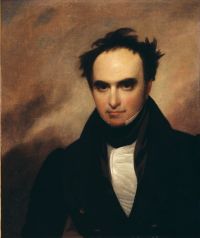
Conversely, a powerful counter-argument holds that architecture's highest purpose is the creation of great and noble buildings that capture the public imagination and give monumental expression to a community's ideals [20]. According to this view, ornamentation is not merely acceptable but essential in structures intended for display, such as temples or triumphal arches, where aesthetic pleasure is a primary goal independent of use [19]. The development of significant public architecture is also tied to political evolution; edifices for public comfort, education, and governance arise only when a society recognizes its people as a civic body with collective needs [21]. In the United States, statesman Daniel Webster called for an architecture that would unite beauty and utility, creating public works that could be admired for both their form and their function [23].
The Museum's Mandate, Serving the Collection and the Public
Within the specialized context of museums, the debate between grandeur and function takes on a particular urgency. A clear consensus among museum professionals holds that architectural design must ultimately serve the institution's core mission: housing, preserving, and presenting its collections to the public [24, 28]. A museum has a dual objective, aiming both to create exhibits that are instructive for the general visitor and to advance scientific knowledge through the study of its holdings [25]. Therefore, the building itself should be conceived as a tool to facilitate these ends, rather than as an independent work of art that might compete with them.
Architectural choices that impede a museum's mission have been the subject of sharp critique. Archaeologist W. M. Flinders Petrie argued vehemently that a building with inadequate lighting cannot properly be called a museum, no matter how ornate or celebrated its design [29]. He condemned as a "marvel of folly" the construction of national museums where the architect's vanity took precedence over the basic needs of the collection and the opinions of the curatorial staff . Others, like Margaret Talbot Jackson, offered more specific warnings against architectural features like marble doorways, which can overwhelm the objects on display and constrain future decorative schemes [30]. The cardinal virtues of a museum building, from this perspective, are simplicity, cleanliness, abundant light, and a design that prioritizes economical management and the effective arrangement of exhibits .
Ultimately, this functionalist view posits that the true greatness of a museum lies not in its physical structure but in its intellectual and human resources. While collections require suitable housing, the global reputation of an institution is built upon the strength and expertise of its curatorial staff [26]. The evolution of the modern museum reflects a significant philosophical shift—away from the model of a static warehouse of curiosities maintained for an elite staff, and toward a dynamic educational center actively engaging the public [27]. This paradigm subordinates the architectural monument to the institutional mission, insisting that the edifice must support, rather than dominate, the vital work of public outreach and scientific advancement.
The history of public edifices, with the Louvre as a central case study, reveals a sustained and evolving tension between architecture as a symbol of power and architecture as a platform for public service. The palace's journey from a monument of royal and imperial ambition to a national museum embodies a profound shift in societal values, away from autocratic display and toward democratic access . This specific institutional history reflects a wider, perennial conflict in the field of architecture, where the pursuit of inspiring grandeur often collides with the practical demands for utility and economy . For museums in particular, this debate is not abstract; architectural hubris can directly undermine the core mission of exhibiting, preserving, and interpreting collections for the public benefit .
This enduring dialogue is about more than aesthetics versus function; it concerns the fundamental purpose of cultural institutions and the nature of public space. The challenge for contemporary architects and their patrons is to navigate between the extremes of sterile, uninspired utility and grandiose but impractical monumentality . A truly successful public building must achieve a synthesis, serving its purpose efficiently while also embodying and communicating collective ideals. As societies continue to renegotiate their relationship with history, culture, and civic life, the buildings they choose to erect will remain a potent and often contested expression of their deepest aspirations.