AI-generated from sources
The Open Door, The Gilded Cage, The Public Museum's Persistent Paradox
In Brief
- Public museums were founded on the ideal of universal access and the democratization of culture.
- The museum's democratic mission consistently conflicted with societal elitism, the influence of private patronage, and the specialized nature of vast collections.
- The overwhelming scale and often unfocused presentation of exhibits frequently led to public bewilderment, hindering true engagement.
- The contemporary 'open access' movement seeks to dismantle structural and financial barriers, ensuring cultural heritage is genuinely accessible to everyone.
Main authors


The public museum emerged as a powerful symbol of a new democratic era, a space where the splendors of history and art, once the exclusive domain of royalty, were repurposed for the enlightenment of the citizenry [1]. In the 19th century, this transformation was heralded as a profound societal advance. Institutions like the British Museum were envisioned not merely as repositories of objects, but as engines of social progress and national pride [8]. Proponents saw them as uniquely equalizing spaces where rich and poor could meet on common ground, contemplating works that transcended social station [3]. The very existence of these grand public buildings, open to all, was considered a hallmark of a civilized and forward-thinking democracy, committed to the intellectual and moral elevation of its people [6].
This foundational ideal, however, has always been shadowed by a persistent and complex reality. The promise of universal access has continually contended with forces of social and economic stratification. From their inception, these institutions have navigated a delicate balance between their role as public educators and their function as sites of specialized knowledge and elite cultural display [12, 13]. The democratic mission to serve the entire populace often found itself in tension with the influence of private patronage, the esoteric nature of vast collections, and professional practices that implicitly favored the connoisseur over the common visitor [15, 19]. This enduring friction between the museum as a universal public forum and as a space reflecting societal hierarchies has defined its history and continues to fuel debates about its ultimate purpose and responsibility to the public it was created to serve.
An Ideal of Civic Enlightenment and Universal Access
The establishment of the public museum was rooted in a profound belief in its power to democratize culture and knowledge. These institutions were conceived as public property, a collective inheritance for the nation to enjoy freely, in contrast to private commercial ventures like theaters or concerts [7]. The principle of free admission was central to this vision, positioning the museum as a place of refuge and enrichment available to every citizen, regardless of wealth [5]. This ethos was particularly evident in Britain, where the opening of the British Museum and National Gallery to the general public was seen as a monumental step towards a more liberal and inclusive society [9]. The presence of working-class men and even nursery-maids in these galleries was noted by observers like Margaret Fuller as a sign of their beneficial, civilizing influence, even if their presence was sometimes noisy or unrefined [2].
Beyond simple access, the museum was cast as a vital educational tool for the masses. It was believed that regular exposure to great works of art and historical artifacts could cultivate the minds of ordinary people, offering an education in itself . This mission was taken seriously, with some museums creating guidebooks and other aids designed to make the vast collections more comprehensible and engaging for the tens of thousands who flocked to them during holidays [4]. This effort to mediate the experience for a non-specialist audience underscores the ambition to transform the museum from a mere cabinet of curiosities into a dynamic instrument of public learning and intellectual growth.
Ultimately, the public museum was framed as a cornerstone of national identity and a monument to the spirit of the nation . Its grandeur was meant to inspire civic pride in all citizens, providing a tangible representation of the nation's cultural and historical achievements. The very flourishing of such institutions was presented as evidence of a healthy democracy, one that trusted in its people's capacity to learn from the past to build a better future . By converting former royal palaces into public galleries, society was making a clear statement: culture was no longer the exclusive property of an aristocracy but a shared resource for the betterment of all .
The Competing Realities of Elitism and Exclusion
Despite the democratic rhetoric surrounding their foundation, public museums have consistently struggled with ingrained forms of elitism. From early on, a distinction was made between the thoughtful, frequent visitor and the
mere holiday guests
who arrived in overwhelming crowds, supposedly less capable of appreciating the collections . This perception was reinforced by practical arrangements, such as designating special days for artists and copyists, shielding them from the
crowding and rude staring of thoughtless strangers
thereby creating a hierarchy of access [11]. Some commentators, like John Ruskin writing in the late 19th century, explicitly challenged the idea of the museum as a free-for-all, arguing it was a place for preservation and occasional exhibition, more akin to a guarded arsenal than a public library open to all .
The influence of wealth and private patronage has also shaped museum collections and access in ways that can undermine their public mission. The acquisition of art has historically been the domain of the wealthy, with precious medieval or classical objects often ending up in private hands or state collections, far from public reach [10]. Even when donated to public institutions, the gifts of affluent patrons could impose their particular, sometimes mediocre, tastes upon a museum, which might feel compelled to accept them to maintain financial support . The very concept of private ownership of unique cultural treasures has been questioned, highlighting a fundamental conflict between an individual's property rights and the public's right to experience its shared heritage [18]. This tension extends to national levels, with major museums sometimes benefiting from underground networks to acquire artifacts, effectively bypassing the laws of other countries [16].
Furthermore, the professionalization and sheer scale of museum collections have often created barriers for the general public. Critics noted that the drive to amass encyclopedic collections in a central national institution, while beneficial for specialists, could render the museum enormous and bewildering for anyone else . This intellectual barrier contributed to a reality where American museums, unlike public libraries, were not widespread civic institutions but largely a cult of the wealthy [14]. This stratification was observable in visitor demographics, where European museums might attract people from all walks of life, but their American counterparts in New York or Boston were frequented almost exclusively by the rich and educated [21]. Even access for producing reproductions could be restricted, with commercial photography services creating a financial barrier that limited the museum's ability to serve the public effectively [17], or access being reserved for the descendants of the original artisan donors [20].
The Enduring Quest for Truly Public Access
The gap between the museum's democratic promise and its often-exclusive reality has fueled a long-standing debate over its purpose and methods. A core problem has been the overwhelming scale of the collections themselves. The sheer size of institutions like the British Museum was recognized as early as the 1860s as a
wearisome
headache-inducing experience for the average visitor [23]. This sense of being lost in a sea of artifacts could lead to public indifference, with even the most priceless collections failing to draw crowds, particularly on days with paid admission [24, 30]. This phenomenon of public bewilderment led some early 20th-century museum professionals to conclude that the democratic revolution had gone too far, arguing for a more curated and less overwhelming presentation of objects [25].
This institutional challenge is compounded by a historical lack of clear purpose. Some critics have argued that many museums evolved without a defined public mission, expanding from the haphazard
cabinet of rare and curious things
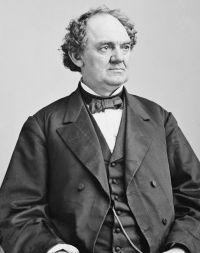
without a coherent strategy for collection, arrangement, or exhibition [29]. This lack of clarity leaves museums vulnerable to external pressures, including the logic of the marketplace. The success of popular, commercially minded enterprises, like those of P. T. Barnum, which consistently drew larger crowds than even the British Museum, highlighted a public appetite for entertainment that traditional institutions often struggled to meet [22]. In the contemporary era, this tension has sharpened, with commentators like Adam Harangozó warning that the market logic of neoliberalism threatens to transform publicly funded institutions, challenging them to redefine their core mission away from commercial imperatives [26].
In response to these enduring challenges, the modern concept of
open access
has emerged as a critical framework for reform. This contemporary movement calls on cultural institutions to fundamentally rethink their role in providing access to heritage [27]. Advocates argue that museums and archives should not act as owners or
prisons
of history but as facilitators of unrestricted use and engagement [28]. This perspective directly confronts economic barriers, asserting that cultural heritage should not be accessible only to those who can afford it . Despite significant hurdles like budget cuts and inadequate infrastructure, the imperative remains for these institutions to build bridges to culture, ensuring that their vast knowledge and collections are preserved in a way that makes them genuinely and easily accessible to everyone .
The public museum was born from a revolutionary ideal: that culture is a universal right, not a privileged possession. Throughout its history, this principle of democratic access has been its proclaimed mission, envisioning the institution as a great equalizer and a source of civic pride for all . Yet, this noble aspiration has been perpetually tested by the countervailing forces of elite patronage, professional specialization, and the sheer, often bewildering, scale of its collections . The result has been a persistent paradox, where the open door of the museum often leads to a space that feels culturally or intellectually gated, implicitly favoring the specialist, the student, or the wealthy patron over the general public it was meant to serve .
Today, the debate over the museum's role continues, reframed by new economic and technological realities. The modern call for true
open access
as articulated by thinkers like Adam Harangozó, represents the latest chapter in this long struggle to resolve the institution's core tension . It recasts the historical challenge of public bewilderment and elite capture as a contemporary mandate to dismantle structural and financial barriers . As cultural institutions navigate a landscape increasingly shaped by market forces, the fundamental question remains: how can they fulfill their original democratic promise, leveraging new tools and philosophies to ensure that our shared heritage becomes not just a preserved relic, but a truly living and accessible resource for all.