AI-generated from sources
The Museum’s Perpetual Pivot, From Curiosity to Conscience
In Brief
- Museums evolved from private 'cabinets of curiosities' to public institutions with a mandate for education and societal service.
- A persistent tension exists between museums' roles as centers for rigorous scholarly research and their commitment to broad public engagement and accessibility.
- Over-emphasis on academic classification can stifle aesthetic wonder; modern museums prioritize emotional connection and thoughtful visitor experience through selective displays.
- To maintain relevance, museums must engage with contemporary art and 'uncomfortable truths' to reflect society's ongoing story, not just preserve the past.
Main authors
The modern museum, a cornerstone of public cultural life, carries within its institutional DNA the legacy of its origins as the private 'cabinet of curiosities.' These early collections, often amassed without a clear organizing principle, reflected the eclectic tastes of individual collectors rather than a coherent public mission [1]. Over the last two centuries, this model has been fundamentally transformed. The impulse to simply accumulate rare and intriguing objects has given way to a more structured purpose, one increasingly defined by public service and the need for a central, guiding idea [2]. This evolution from a private treasure chest to a public trust has been marked by a persistent, unresolved tension between the act of collecting and the responsibility of educating.
This shift precipitated an ongoing debate about what a museum should ultimately be and whom it should serve. The very definition of the institution's purpose has become a site of contention, with some arguing its primary function is the methodical diffusion of knowledge through carefully arranged exhibits [3, 7]. In the American context, this educational mandate was even seen as the primary reason for a museum's existence, growing directly from the needs of the community [4]. Yet this public-facing ideal has always coexisted with other, sometimes conflicting, imperatives: the drive for scholarly research, the preservation of priceless artifacts, and the desire to inspire aesthetic wonder. The journey from a disorganized collection to a purposeful institution has thus been less a linear progression than a continuous negotiation between its role as a repository of things and its ambition to be a generator of ideas and experiences for a broad audience [5].
From Unsystematic Collections to Public Institutions
The historical antecedent of the public museum was the private cabinet, a collection of objects brought together often without what modern curators would consider 'rhyme or reason' . These assemblages were born of individual fascination, and for a long time, the institutions that grew from them lacked a clearly articulated public purpose or a systematic method for arrangement and exhibition . This ad-hoc approach eventually came to be seen as insufficient. By the early 20th century, a consensus emerged that neither a private collector nor a public curator should be content to oversee a 'mere curiosity-shop'; instead, every collection required a central idea to give it meaning and structure .
This conceptual shift reframed the museum's core objective from mere acquisition and preservation to the active dissemination of knowledge . The value of specimens was no longer seen as inherent but as tied to their ability to illustrate ideas and teach the science to which they belonged . This philosophical reorientation was particularly pronounced in the United States, where, according to observers like Margaret Talbot Jackson in 1917, museums were understood primarily as responses to the educational needs of the community, rather than as repositories for pre-existing collections . This American model emphasized dynamic public engagement, creating a stark contrast with some European institutions of the time, which appeared to function more for the benefit of their internal staff than for an unenlightened public .
The practical consequences of this new educational mandate included a focus on the thoughtful arrangement, display, and labeling of objects on view . However, the transition to a fully public institution was gradual and incomplete. The ideal of universal access often clashed with historical realities. For example, the main gallery of a prominent museum in Paris at the dawn of the 19th century, while lauded for its liberality, granted daily access to artists and foreigners but opened its doors to the general Parisian public only one or two days a week [6]. This highlights that even as the museum's purpose was being redefined in public terms, the 'public' itself was a contested and often narrowly defined category.
The Dual Mandate of Research and Education
The contemporary museum is defined by a fundamental duality of purpose. It must simultaneously serve as a center for scientific advancement through expeditions and scholarly study, while also creating exhibits that are instructive and engaging for a lay audience [10]. These two objectives—rigorous research and accessible public education—are often seen as equally important, yet they can pull the institution in conflicting directions, creating a persistent tension over resources, priorities, and identity.
From a research-centric perspective, a museum's true greatness is measured by the scholarly output of its staff [14]. In this view, the institution's primary role is to advance knowledge through exploration and the meticulous process of fitting new discoveries into the existing intellectual framework [13]. Proponents of this model warn that when a museum prioritizes exhibition preparators over curators and impressive displays over published research, it enters a state of 'senility' . The argument follows that museums should function like universities, investing in talented researchers as a primary means of fulfilling their duty, rather than focusing exclusively on amassing collections and constructing buildings [15]. Some specialists have even been criticized for a perceived disregard for the public, advocating for institutions to be administered solely for the benefit of those engaged in research [16].
Conversely, another school of thought argues that a museum cannot be a mere 'storehouse,' but must function as a 'living and vital force' within its community [8]. This perspective champions the institution's educational and inspirational role, targeting the general populace rather than a specialized academic world [11]. A key strategy for achieving this vitality is educational outreach, particularly to schoolchildren, which is seen as the most effective way to cultivate future generations of museum-goers . The ultimate purpose, from this standpoint, is not to produce technical scholarship but to spark a transformative moment of insight, even if only for a single intelligent young person for whom a glance at an ancient artifact can change everything [17].
This debate over the museum's primary function is not merely theoretical; it manifests in concrete institutional practices and ongoing disputes among professionals. Museum directors themselves have long debated the actual teaching efficacy of even their most carefully designed exhibition collections [9]. A common strategy to manage the dual mandate is the physical separation of extensive reference collections, intended for scholarly use, from the more selective exhibition collections designed for public viewing . The philosophical divide remains, however. In the 19th century, John Ruskin forcefully asserted that a national museum was fundamentally different from a school or college [18], while early 20th-century thinkers like Lionel R. McColvin described the museum's aims as primarily educational and artistic [12].
Beyond Display, Towards Experience and Relevance
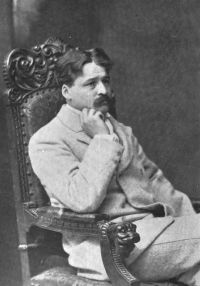
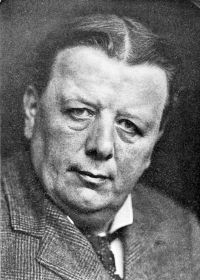
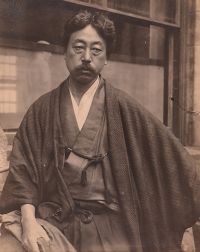
A significant critique leveled against museums is that an overemphasis on academic rigor can stifle the very wonder they aim to inspire. Commentators such as Clive Bell and Okakura Kakuzō have argued that institutional environments can become sterile, crushing visitors with the tacit expectation that art is for 'study and improvement' rather than emotional engagement [24]. This approach, which prioritizes classification and erudition, risks creating an atmosphere of 'traditional reverence' that inhibits genuine aesthetic sensibility [21, 27]. The fear is that the 'so-called scientific method of exhibition' sacrifices the simple act of enjoyment, turning the museum into a place where art goes to die .
In response, many advocate for an approach that prioritizes emotional connection and aesthetic appreciation. The goal shifts from pure instruction to the cultivation of what one 19th-century writer called the 'nobler passions,' making the museum a school for the moral sense [19, 29]. This perspective suggests that beauty is a universal language, accessible to all, and that art's true home is in the 'heart of humanity' . Even collections of lesser quality can possess a 'mild historical quality,' where the musty atmosphere and dated objects evoke a touching sense of the past, proving that the visitor's experience transcends the singular masterpiece [20].
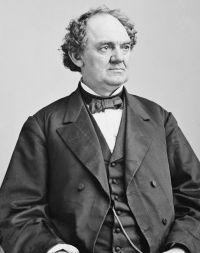
To foster this deeper engagement, curators have developed specific strategies to improve the visitor experience. It is now widely recognized that exhibiting an overwhelming number of similar objects can induce 'fatigue of mind and eye,' while also giving a misleading impression of the past [22]. A more effective method is to carefully select key items and present them with artistic consideration for spacing, background, and lighting [28]. The use of reproductions, such as plaster casts, is also encouraged to supplement original works and spark enthusiasm among non-specialists, rather than being relegated to storage as they often are in European institutions [23]. Even the showman P. T. Barnum understood this principle of audience engagement, adapting his museum by combining curiosities with dramatic entertainment to appeal directly to his patrons' desire for novelty and spectacle [26].
The museum's struggle for relevance also extends to its relationship with the present. A preoccupation with acquiring treasures from the past can lead to a state of 'learned impotence,' where contemporary artistic production is neglected [25]. Okakura Kakuzō argued at the turn of the 20th century that no vital cultural institution can afford to ignore contemporary art, as it is the art that truly reflects its own time . This idea has found a powerful modern expression in the vision articulated by Barack Obama, who described the contemporary museum's role as telling a 'fuller story' that does not shy away from 'uncomfortable truths' [30]. In this view, the museum becomes a forum for national self-reflection, acknowledging that society is a 'constant work in progress' and using its collections to foster a critical and patriotic dialogue about the nation's past and future .
The museum's evolution from a private cabinet of curiosities to a major public institution has been a story of constant redefinition . Its identity has been forged in the crucible of competing missions: the impulse to collect versus the mandate to educate, the demands of rigorous scholarship versus the need for broad public accessibility, and the goal of objective instruction versus the desire to create profound aesthetic and emotional experiences . These foundational tensions have shaped every aspect of the museum, from its collection strategies and curatorial priorities to the very design of its exhibition halls . The institution that has emerged is not a static temple to the past, but a dynamic and often conflicted space, perpetually negotiating its obligations to artifacts, scholars, and the public.
Looking forward, the museum's continued vitality appears to depend on its capacity to navigate these inherent contradictions and adapt its purpose for new generations. The contemporary call for institutions to engage with living artists, tell more inclusive histories, and confront uncomfortable societal truths suggests that this evolution is far from complete . By embracing its role as a space for critical reflection on an imperfect and ongoing national story, the museum positions itself not merely as a passive repository of history, but as an active participant in the conversations that will shape the future . Its purpose remains a work in progress, forever pivoting between the preservation of what has been and the inspiration of what is yet to come.