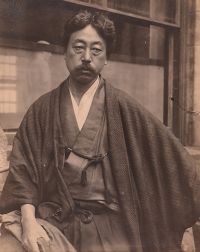
Okakura Kakuzō

Okakura Kakuzō

Summary

Portrait of Okakura Kakuzō Okakura Kakuzō The Book of Tea (1906)

In art vanity is equally fatal to sympathetic feeling, whether on the part of the artist or the public.
Nothing is more hallowing than the union of kindred spirits in art. At the moment of meeting, the art lover transcends himself. At once he is and is not. He catches a glimpse of Infinity, but words cannot voice his delight, for the eye has no tongue. Freed from the fetters of matter, his spirit moves in the rhythm of things. It is thus that art becomes akin to religion and ennobles mankind. It is this which makes a masterpiece something sacred.
Source: Wikisource

Portrait of Okakura Kakuzō Okakura Kakuzō The Book of Tea (1906)

On the day destined for his self-immolation, Rikiu invited his chief disciples to a last tea-ceremony. Mournfully at the appointed time the guests met at the portico. As they look into the garden path the trees seem to shudder, and in the rustling of their leaves are heard the whispers of homeless ghosts. Like solemn sentinels before the gates of Hades stand the grey stone lanterns. A wave of rare incense is wafted from the tea-room; it is the summons which bids the guests to enter. One by one they advance and take their places.
Source: Wikisource

Portrait of Okakura Kakuzō Okakura Kakuzō The Book of Tea (1906)

FLOWERS
IN the trembling grey of a spring dawn, when the birds were whispering in mysterious cadence among the trees, have you not felt that they were talking to their mates about the flowers? Surely with mankind the appreciation of flowers must have been coeval with the poetry of love. Where better than in a flower, sweet in its unconsciousness, fragrant because of its silence, can we image the unfolding of a virgin soul? The primeval man in offering the first garland to his maiden thereby transcended the brute. He became human in thus rising above the crude necessities of nature.
Source: Wikisource

Get perspective with Kwize: daily news enlightened by great literature