 Lafcadio Hearn,
Books and Habits, from the Lectures of Lafcadio Hearn
Lafcadio Hearn,
Books and Habits, from the Lectures of Lafcadio Hearn
“ Contemporary literature in the West has shown some signs of ethical change. ”
The concept of "contemporary" in literature refers to the current era's cultural, intellectual, and societal developments, often expressed through reflections on progress, tradition, and transformation. Authors such as Woodrow Wilson highlighted its forward-thinking spirit, portraying the present as a break from the past toward "something new," while Baron Acton emphasized its significance as a narrative of "our own" ongoing challenges and evolution.
Parke Godwin cast doubt on the value of modern changes, questioning whether societal shifts indicate progress or decline, and P. L. Jacob connected contemporary issues to historical foundations, arguing that the past provides insights into present dilemmas. Matthew Arnold contrasted modern democratic values with the quest for cultural excellence. Collectively, these viewpoints illustrate a recurring thematic interest in placing the present within wider temporal and ethical contexts, harmonizing innovation with reflection.
Lafcadio Hearn,
Books and Habits, from the Lectures of Lafcadio Hearn
“ Contemporary literature in the West has shown some signs of ethical change. ”
 Woodrow Wilson,
The New Freedom
(1913)
Woodrow Wilson,
The New Freedom
(1913)
“ We think of the future, not the past, as the more glorious time in comparison with which the present is nothing. Progress, development,—those are modern words. The modern idea is to leave the past and press onward to something new. ”
Baron John Emerich Edward Dalberg Acton Acton, Lectures on Modern history
“ To men in general I would justify the stress I am laying on Modern History, neither by urging its varied wealth, nor the rupture with precedent, nor the perpetuity of change and increase of pace, nor the growing predominance of opinion over belief, and of knowledge over opinion, but by the argument that it is a narrative told of ourselves, the record of a life which is our own, of efforts not yet abandoned to repose, of problems that still entangle the feet and vex the hearts of men. ”
Parke Godwin, Aesthetic Papers (1849)
“ When a change is made in the state of any thing, how do we know that such a change has been for the better? By what signs do we distinguish an onward from a retrograde movement? Great changes are constantly taking place in the forms of matter, in the lives of men, in the constitution of states, in the whole structure and working of society. The elements, the passions, discoveries in literature, in art, all produce stupendous revolutions in human affairs. How do we know, that these various changes are for better or for worse, or that they carry us towards perfection or imperfection? ”
P. L. Jacob, Military and religious life in the Middle Ages and at the period of the Renaissance (1870)
“ The emotions of the present may incline us to look back regretfully upon that past which reminds us of so much that is great and noble, in spite of its many and inevitable drawbacks, and which, by showing us the origin of modern society, by revealing to us the manner of its birth and its onward progress, may give us the key to its present critical condition when a profound and universal transformation seems about to take place. ”
 Alfred Henry Lewis,
The Boss, and How He Came to Rule New York
Alfred Henry Lewis,
The Boss, and How He Came to Rule New York
“ I remark on men, and upon their conditions of the moral, the mental, and the physical!—on the indomitable courage of restoration as against the ceaseless industry of decay!—on the high and the low, the good and the bad, the weak and the strong, the right and the wrong, the top and the bottom, the past and the future, the white and the black, and all those other things that are not!—and I laugh at all. ”
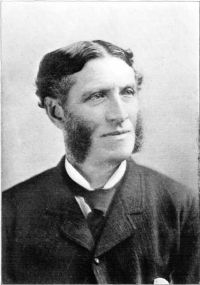 Matthew Arnold,
Culture and Anarchy
Matthew Arnold,
Culture and Anarchy
“ Those who know their besetting faults, those who have watched them and listened to them, or those who will read the instructive account recently given of them by one of themselves, the Journeyman Engineer, will agree that the idea which culture sets before us of perfection,—an increased spiritual activity, having for its characters increased sweetness, increased light, increased life, increased sympathy,—is an idea which the new democracy needs far more than the idea of the blessedness of the franchise, or the wonderfulness of their own industrial performances. ”
Robt. L. Taylor, Gov. Bob. Taylor's Tales
“ I believe the refinements of modern society, its elegant accomplishments, its intellectual culture, and its conceptions of the beautiful, are glorious evidences of our advancement toward a higher plane of being. ”
Various, The Continental Monthly, Vol. 6…
“ What we now are, we have become by our own culture and development, and by the inflowing of those great modern ideas which have affected all the world, and helped to build up its civilization into such stately proportions. ”
 Theodore Parker,
Speeches, Addresses, and Occasional Sermons…
Theodore Parker,
Speeches, Addresses, and Occasional Sermons…
“ These subordinate peculiarities will depend first on the peculiar genius, idea and work of the nation, and next on the transient circumstances, geographical, climactic, historical and secular, to which the nation has been exposed. The past helped form the circumstances of the present age, and they the character of the men now living. ”
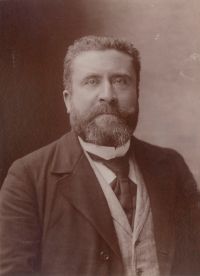 Jean Jaurès,
Studies in Socialism — Moonlight
(1906)
Jean Jaurès,
Studies in Socialism — Moonlight
(1906)
“ They were constantly feeling the breath of the future pass in their long hair, and thrill through their long beards. They looked for the man of the future, the society of the future, the science of the future, the art of the future, the religion of the future. ”
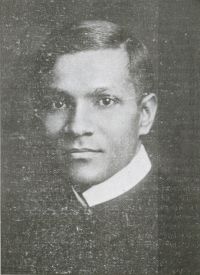 Benoy Kumar Sarkar,
The Science of History and the Hope of Mankind
(1912)
Benoy Kumar Sarkar,
The Science of History and the Hope of Mankind
(1912)
“ Religion, industry, state, education, and literature have been consciously transformed by the heroic efforts of such great men of the world, and these conscious and artificial transformations of the several aspects of social life have been the constituents of a new environment and thus the seeds of Renaissance. ”
 Evelyn Underhill,
The Life of the Spirit and the Life of To-day
Evelyn Underhill,
The Life of the Spirit and the Life of To-day
“ It is, like the State, embodied history; and as such lives with its own life, a life transcending and embracing that of the individual souls of which it is built. And here, in its combined social and historic character, lie the sources alike of its enormous importance for human life and of its inevitable defects. ”
 John Stuart Mill,
Auguste Comte and Positivism
John Stuart Mill,
Auguste Comte and Positivism
“ But as society proceeds in its development, its phaenomena are determined, more and more, not by the simple tendencies of universal human nature, but by the accumulated influence of past generations over the present. ”
 William Blake,
Life of William Blake
(1863, 1880)
William Blake,
Life of William Blake
(1863, 1880)
“ In other words, the poem represents the action and re-action of Ideas upon society, and of society upon Ideas. Argument of the stanzas: 2. The Idea, conceived with pain, is born amid enthusiasm. 3. If of masculine, enduring nature, it falls under the control and ban of the already existing state of society (the woman old) . 5. As the Idea develops, the old society becomes moulded into a new society (the old woman grows young) . 6. The Idea, now free and dominant, is united to society, as it were in wedlock. ”
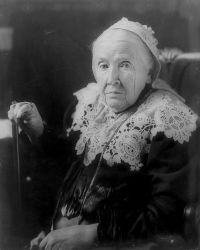 Julia Ward Howe,
Modern Society
Julia Ward Howe,
Modern Society
“ Modern society, concerning which you have bid me discourse to you, is this tricksy spirit, many-featured and many-gestured, coming in a questionable shape, and bringing with it airs from heaven and blasts from hell. ”
 William Eleroy Curtis,
Around the Black Sea
William Eleroy Curtis,
Around the Black Sea
“ The other part, the all-pervasive influence of their work, the change in ideas and ideals, the enlightenment of the people of all grades and classes, the change in the condition of women, the betterment of the family, the fading out of superstitious notions, the widespread longing for reform in matters social and secular, and for advancement in civilization—all these are results of the greatest moment, which cannot be shown in figures, for they are greater than figures. ”
 Josiah Royce,
The Spirit of Modern Philosophy
(1892)
Josiah Royce,
The Spirit of Modern Philosophy
(1892)
“ Our age, as we shall learn, contains merely what was implicit in the very waywardness of that revolutionary period. Their youthful enthusiasms, at first vague, wandering, conflicting, took form at length through growth, and produced, in their maturity, our modern doctrine of evolution, our modern efforts to bring into close relation the natural and the spiritual, our whole modern many-sidedness of interest and experience. ”
 Johann Gottlieb Fichte,
Characteristics of the Present Age
(1806)
Johann Gottlieb Fichte,
Characteristics of the Present Age
(1806)
“ And so in our own Age, when it has somewhat recovered and composed itself from the manifold errors with which it has been perplexed and harassed, will Inspired Men arise and bring to it that of which it stands in need. We have finished the task which we proposed to ourselves:—we have delineated, briefly and succinctly as was our purpose, the Characteristics of the Present Age contemplated from those essential principles which belong to all Time. There remains nothing further for us to do but to add a conclusion to the whole. ”
 Bertrand Russell,
Why Men Fight
(1917)
Bertrand Russell,
Why Men Fight
(1917)
“ It should be inspired, not by a regretful hankering after the extinct beauties of Greece and the Renaissance, but by a shining vision of the society that is to be, of the triumphs that thought will achieve in the time to come, and of the ever-widening horizon of man's survey over the universe. ”
 Richard Jefferies,
The Story of My Heart: An Autobiography
Richard Jefferies,
The Story of My Heart: An Autobiography
“ A great life—an entire civilisation—lies just outside the pale of common thought. Cities and countries, inhabitants, intelligences, culture—an entire civilisation. Except by illustrations drawn from familiar things, there is no way of indicating a new idea. ”
“ In circles highly civilised the great things, the real things, the hard, the cruel and even the tender things, the true elements of any tension and true facts of any crisis, have ever, for the outsider’s, for the critic’s use, to be translated into terms—terms in the distinguished name of which, terms for the right employment of which, more than one situation of the type I glance at had struck me as all irresistibly appealing. ”
James J. Walsh, The Thirteenth, Greatest of Centuries
“ Now this great century, the last of the true Middle Ages, which as it drew to its own end gave birth to Modern Society, has a special character of its own, a character that gives it an abiding and enchanting interest. ”
 Charlotte Perkins Gilman,
The Man-Made World; Or, Our Androcentric Culture
Charlotte Perkins Gilman,
The Man-Made World; Or, Our Androcentric Culture
“ Through it we know the past, govern the present, and influence the future. ”
William Hill Brown, The power of sympathy: or, The triumph of nature… (1894)
“ To observe the origin of civilization—the gradual progress of society, and the refinements of manners, policy, morality and religion—to observe the progress of mankind from simplicity to luxury, from luxury to effeminacy, and the gradual steps of the decline of empire, and the dissolution of states and kingdoms, must blend that happy union of instruction and entertainment, which never fails to win our attention to the pursuit of all subjects. ”
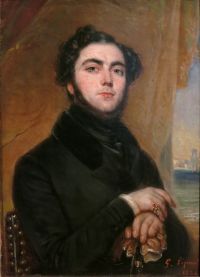 Eugène Sue,
The Pocket Bible; or, Christian the Printer…
Eugène Sue,
The Pocket Bible; or, Christian the Printer…
“ The various springs from which human action flows, the various types which human crises produce, the virtues and the vices which great historic conflicts heat into activity—all these features of social motion, never jointly reproduced in works of history, are here drawn in vivid colors and present a historic canvas that is prime in the domain of literature. ”
J. D. Buck, The New Avatar and The Destiny of the Soul
“ In tracing analogies through the history of the past, the conditions, premonitory, present, and subsequent to great world-movements have often been referred to.Nothing is more common or more patent than the oft-repeated saying, “This is the age of science.” 211 Any great movement that undertakes at the present day to deal with the deeper problems of individual and social life, must fit in and conform to the “spirit of the present age.” ”
 Jean-Jacques Rousseau,
The Social Contract
(1913)
Jean-Jacques Rousseau,
The Social Contract
(1913)
“ Matters once at this pitch, it is easy to imagine the rest. I shall not detain the reader with a description of the successive invention of other arts, the development of language, the trial and utilisation of talents, the inequality of fortunes, the use and abuse of riches, and all the details connected with them which the reader can easily supply for himself. I shall confine myself to a glance at mankind in this new situation. ”
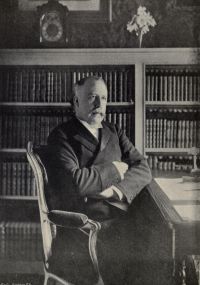 George William Erskine Russell,
Matthew Arnold
George William Erskine Russell,
Matthew Arnold
“ In all questions affecting national character and tendency, the development of civilization, public manners, morals, habits, idiosyncrasies, the influence of institutions, of education, of literature, his insight was penetrating, his point of view perfectly original, and his judgment, if not always sound, invariably suggestive. These qualities, among others, gave to such books as Essays in Criticism, Friendship's Garland, and Culture and Anarchy, an interest and a value quite independent of their literary merit. ”
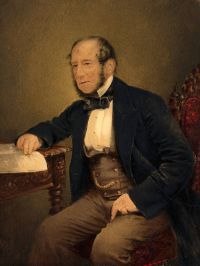 Henry Adams,
History of the United States of America…
(1889)
Henry Adams,
History of the United States of America…
(1889)
“ In a single day, almost in a single instant, the public turned from interests and passions that had supplied its thought for a generation, and took up a class of ideas that had been unknown or but vaguely defined before. ”
 William Lyon Mackenzie King,
The Secret of Heroism: A Memoir of Henry Albert Harper
William Lyon Mackenzie King,
The Secret of Heroism: A Memoir of Henry Albert Harper
“ If men will but be true to themselves, a new era is dawning upon us; an era, which, if it will not be free of pain, hardship and suffering for many, will, while preserving a premium as a reward for the energetic, a punishment for the mean, leave the final judgment in industrial questions with public opinion, which, when informed, is ready to choose what is right in preference to what is base. ”
Durant Drake, Problems of Conduct: An Introductory Survey of Ethics
“ In various other ways, apart from the mutual influence of divergent group-customs, the progress of civilization tends to produce variations in ideals. The increase of knowledge, the development of science and philosophy, bring floods of new ideas to burst the old dams; deepening insight reveals the irrationality of old ideas to the leaders of thought. The progress of the arts gives new interests and valuations. ”
Elijah Kellogg, Charlie Bell, The Waif of Elm Island
“ In their sayings and doings is represented the subsoil of American character—the home life and modes of thought of those who made the culture and progress; thus endeavoring, in a pleasing manner, to teach those great truths which lie at the foundation of thrift, progress, and morality. ”
 Johann Wolfgang von Goethe,
The Autobiography of Goethe
Johann Wolfgang von Goethe,
The Autobiography of Goethe
“ The public scenes opened gradually, and went on increasing in importance; the men grew in number, the personages in dignity, their appurtenances, as well as themselves, in splendour; and thus it advanced with every day, till at last even a well-prepared and firm eye became bewildered. ”
Various, Blackwood's Edinburgh Magazine…
“ A change—a great change, almost a revolution—in our social feelings, thoughts and habits,—in our aims and pursuits—in the character of the people and the features of the country—has taken place even in our memory. ”
Various, The Continental Monthly, Vol. 1…
“ The day is coming when the songs and sentences of this great struggle will be garnered up into literary treasuries, pass into household words, and confer honor on the children of those who penned them. Lay hand to the work, all you who have aught to say, aid us to become a medium for the time, and honor yourselves by your utterances. There are a thousand reforms, innumerable ideas fit for the day, ready to bloom forth. ”
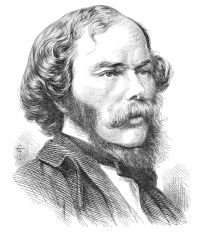 George Henry Lewes,
The Principles of Success in Literature
George Henry Lewes,
The Principles of Success in Literature
“ Literature is at once the cause and the effect of social progress. ”
 Charles Dudley Warner,
Certain Diversities of American Life
Charles Dudley Warner,
Certain Diversities of American Life
“ Naturally, I say, we ought by the time of middle life to come to a conception of what sort of things are of most value. By analogy, in the continual growth of the Republic, we ought to have a perception of what we have accomplished and acquired, and some clear view of our tendencies. ”
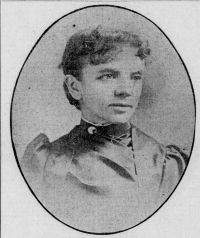 Katharine Pearson Woods,
Metzerott, Shoemaker
(1889)
Katharine Pearson Woods,
Metzerott, Shoemaker
(1889)
“ If the New is to come into existence and the Old is to disappear, two great things must combine,—a world-kindling ethical idea, and a social influence which is powerful enough to lift the depressed masses a great step forward. ”
 Herbert Butterfield,
The historical novel
(1924)
Herbert Butterfield,
The historical novel
(1924)
“ These various areas of life—ages of history, localities and circles of activity—may be viewed as being worlds in themselves and as having a life of their own; but that life only shows itself in its results, as for instance, in the prejudices and turns of thought and habits and peculiarities of speech of the members who make up the world. ”
 John Greenleaf Whittier,
The Inner Life
John Greenleaf Whittier,
The Inner Life
“ What is really momentous and all-important with us is the present, by which the future is shaped and colored. ”
D. W. Bartlett, Presidential Candidates
“ Progress and development mark everything in nature—human societies, as well as everything else. Nothing in the physical world is still; life and motion are in everything; so in the mental, moral, and political. ”
Herbert Butterfield,
The historical novel
(1924)
“ The conditions of the life of the present-day, the current habits of thought, the social relationships of men, the economic situation of the country, the welfare of family and Church, and the relations of those institutions and groups that make their conflicting claims upon the loyalty and cover so much of the activity of individuals, are rich with problems and anomalies, and situations and combinations of circumstance which are peculiar to the age, and are the source of most of the issues of the novel of the present-day. ”
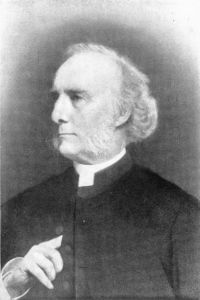 Augustus Jessopp,
The Coming of the Friars
Augustus Jessopp,
The Coming of the Friars
“ To a thoughtful man watching the signs of the times, it may well have seemed that the hope for the future of civilization--the hope for any future, whether of art, science, or religion-lay in the steady growth of the towns. ”
William James, Essays in Radical Empiricism
“ Such have been the changes from aristocracy to democracy, from classic to romantic taste, from theistic to pantheistic feeling, from static to evolutionary ways of understanding life—changes of which we all have been spectators. ”
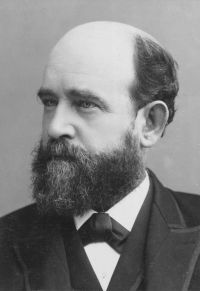 Henry George,
Progress and Poverty, Volumes I and II
Henry George,
Progress and Poverty, Volumes I and II
“ More or less vague or clear, these have been the hopes, these the dreams born of the improvements which give this wonderful century its preëminence. They have sunk so deeply into the popular mind as radically to change the currents of thought, to recast creeds and displace the most fundamental conceptions. ”
