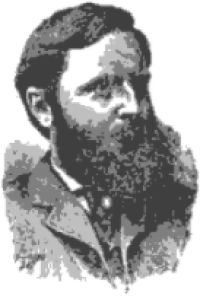
Julia Ward Howe

Biographical details

Portrait of Julia Ward Howe Julia Ward Howe,  Margaret Fuller (1883)

“ In these days she wrote in her journal:—
"There comes a consciousness that I have no real hold on life,—no real, permanent connection with any soul I seem a wandering Intelligence, driven from spot to spot, that I may learn all secrets, and fulfil a circle of knowledge. This thought envelops me as a cold atmosphere."
From this chill isolation of feeling Margaret was sometimes relieved by the warm appreciation of those whom she had truly found, of whom one could say to her: "You come like one of the great powers of nature, harmonizing with all beauty of the soul or of the earth.
”
Source: Wikisource

Portrait of Julia Ward Howe Julia Ward Howe,  Is Polite Society Polite? and Other Essays

“ If they wish to understand what the French people are, and why they are what they are, they will have to study history, politics, and human nature pretty deeply.
If they wish to have an idea of what the French may become, they must keep their faith in all that America finds precious and invaluable,—in free institutions, in popular education, and, above all, in the heart of the people. Never let them believe that while freedom ennobles the Anglo-Saxon, it brutalizes the Gaul. Despotism brutalizes for long centuries, and freedom cannot ennoble in a moment.
”
Source: Gutenberg

Portrait of Julia Ward Howe Julia Ward Howe,  From the Oak to the Olive: A Plain record of a Pleasant Journey

“ The voice of Naples trills, shrieks, scolds, mingling laughter, wail, and entreaty, in a new and confused symphony. Little piano-fortes, played like a barrel organ, go about the streets, giving a pulse to the quick rhythm of life. The common people are pictures, the aristocracy caricatures. When you rise above low life, Italian taste is too splendid for good effects in costume. The most ill-married colors, the most ill-assorted ornaments, deform the pale olive faces, and contradict the dignity of the dark eyes and massive hair. This is somewhat the case in Rome, much more in Naples. ”
Source: Gutenberg

Get perspective with Kwize: daily news enlightened by great literature