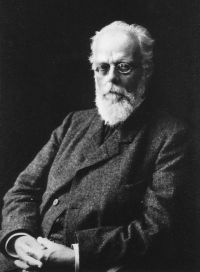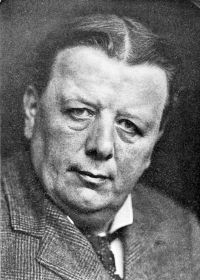
Sir E. Ray Lankester

Biographical details

Portrait of Sir E. Ray Lankester Sir E. Ray Lankester More Science from an Easy Chair

Truly enough, it is not a beauty called forth by natural selection. It is primordial; it is the beauty of great light itself. The response to its charm is felt by every living thing, even by the smallest green plant and the invisible animalcule, as it is by man himself. As I stand on the mountain-side we are all, from animalcule to man, sympathizing and uniting, as members of one great race, in our adoration of the sun. And in doing this we men are for the moment close to and in happy fellowship with our beautiful, though speechless, relatives who also live.
Source: Gutenberg

Portrait of Sir E. Ray Lankester Sir E. Ray Lankester The Kingdom of Man

What we call the will or volition of Man—a discussion of the nature and limitation of which would be impossible in these pages and is happily not necessary for my present purpose—has become a power in Nature, an imperium in imperio, which has profoundly modified not only man’s own history but that of the whole living world and the face of the planet on which he exists. Nature’s inexorable discipline of death to those who do not rise to her standard—survival and parentage for those alone who do—has been from the earliest times more and more definitely resisted by the will of Man.
Source: Gutenberg

Portrait of Sir E. Ray Lankester Sir E. Ray Lankester Degeneration: A Chapter in Darwinism

Does the reason of the average man of civilised Europe stand out clearly as an evidence of progress when compared with that of the men of bygone ages? Are all the inventions and figments of human superstition and folly, the self-inflicted torturing of mind, the reiterated substitution of wrong for right, and of falsehood for truth, which disfigure our modern civilisation—are these evidences of progress?
Source: Gutenberg

Get perspective with Kwize: daily news enlightened by great literature