Summary

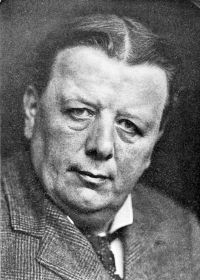
Portrait of Sir E. Ray Lankester Sir E. Ray Lankester Degeneration: A Chapter in Darwinism

Does the reason of the average man of civilised Europe stand out clearly as an evidence of progress when compared with that of the men of bygone ages? Are all the inventions and figments of human superstition and folly, the self-inflicted torturing of mind, the reiterated substitution of wrong for right, and of falsehood for truth, which disfigure our modern civilisation—are these evidences of progress?
Source: Gutenberg

Portrait of Sir E. Ray Lankester Sir E. Ray Lankester Degeneration: A Chapter in Darwinism

It seems to me impossible to emphasise too strongly in such a place and in such a meeting as this, that Invention is widely separate from, though dependent on, Science. Invention is worldly-wise, and despises the pursuit of knowledge for its own sake. She awaits the discoveries of Science, in order to sell them to civilisation, gathering the golden fruit which she has neither planted nor tended.
Source: Gutenberg

Portrait of Sir E. Ray Lankester Sir E. Ray Lankester Degeneration: A Chapter in Darwinism

The fact that no two members of a species are alike has already been shown to be the starting-point which enables the breeder to make his selection. So, too, with natural selection in the struggle for existence; the fact that all the young born of one species are not exactly alike—but some larger, some smaller, some lighter, some darker, some short-legged, some big-eyed, some long-tongued, some sharp-toothed, and so on—furnishes the opportunity for a selection.
Source: Gutenberg

Get perspective with Kwize: daily news enlightened by great literature