“ Why was it that the 'Origin of Species' possessed this extraordinary vitalising and kinetic power, this germinal energy, this contagious force, beyond all other forms of evolutionism previously promulgated? Why did the world, that listened so coldly to Lamarck and Chambers, turn so ready an ear to Charles Darwin and natural selection? Partly, no doubt, because in the fulness of time the moment had come and the prophet had arisen. All great movements are long brewing, and burst out at last (like the Reformation and the French Revolution) with explosive energy. ”
Charles Darwin
Definition and stakes
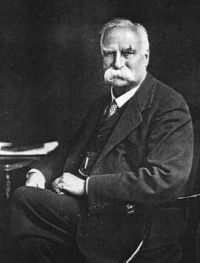
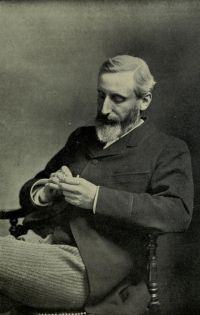
Charles Darwin, an English naturalist and biologist (1809–1882), revolutionized biology through his theory of evolution by natural selection, proposing that all species descend from common ancestors. His 1859 work On the Origin of Species established this mechanism as the dominant explanation for life’s diversity. Authors like Grant Allen highlighted Darwin’s unique ability to synthesize evolutionary ideas, contrasting his influence with earlier proponents such as Lamarck.
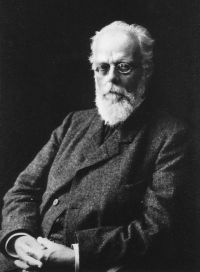
Darwin himself emphasized gradual, incremental changes in his writings, arguing that natural selection acts through “slight, successive, favourable variations.” August Weismann connected Darwin’s ideas to earlier evolutionary thinkers, while George W. Hunter underscored his focus on heredity and environmental adaptation. These perspectives collectively affirm Darwin’s legacy as the unifying framework for understanding biological diversity and the dynamic processes shaping life on Earth.
Quotes about “Charles Darwin”
“ But Charles Darwin was a known personage, an F.R.S., a distinguished authority upon coral reefs and barnacles, a great geologist, a great biologist, a great observer and indefatigable collector. His book came into the public hands stamped with the imprimatur of official recognition. Darwin was the father of the infant theory; Lyell and Hooker stood for its sponsors. The world could not afford to despise its contents ”
“ Inquiry was especially everywhere rife as to the origin and nature of specific distinctions among plants and animals. Those who believed in the doctrine of Buffon and of the 'Zoonomia' and those who disbelieved in it, alike, were profoundly interested and agitated in soul by the far-reaching implications of that fundamental problem. On every side evolutionism, in its crude form, was already in the air. Long before Charles Darwin himself published his conclusive 'Origin of Species,' every thinking mind in the world of science, elder and younger, was deeply engaged upon the self-same problem. ”