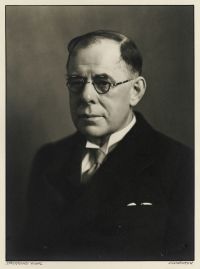
“ Evolutionism, as now commonly understood, may be fairly regarded as a mode of envisaging to ourselves the history of the universe, a tendency or frame of mind, a temperament, one might almost say, or habit of thought rather than a definite creed or body of dogmas. The evolutionist looks out upon the cosmos as a continuous process unfolding itself in regular order in obedience to definite natural laws. ”
Evolutionism
Definition and stakes
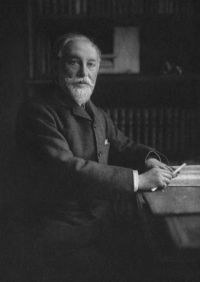
Evolutionism, a term frequently used pejoratively to refer to the theory of evolution, has shifted in meaning from 19th-century teleological notions of progressive change (orthogenesis) to contemporary critiques by creationists who frame it as a secular religion. Authors such as Grant Allen regarded it as a framework for comprehending cosmic processes, while George Ticknor Curtis questioned its capacity to explain biological diversity.
Thomas Huxley underscored its scientific foundation through natural selection, and A. E. Taylor observed its extension beyond the realm of biology. Although largely abandoned in scientific discourse, the term continues to surface in debates, illustrating the ongoing conflict between evolutionary theory and competing worldviews.
Quotes about “evolutionism”
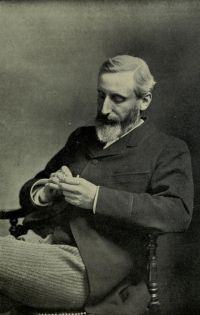 Grant Allen,
Falling in Love; With Other Essays on More Exact Branches of Science
Grant Allen,
Falling in Love; With Other Essays on More Exact Branches of Science
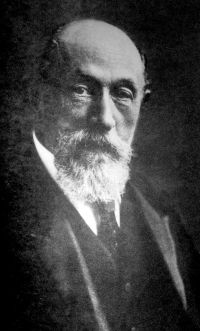
“ So far as Society with a big initial is concerned, evolutionism first began to be talked about, and therefore known (for Society does not read; it listens, or rather it overhears and catches fragmentary echoes) when Darwin published his 'Origin of Species.' That great book consisted simply of a theory as to the causes which led to the distinctions of kind between plants and animals. With evolution at large it had nothing to do ”
 George Edward Moore,
Principia Ethica — Chapter II
(1903)
George Edward Moore,
Principia Ethica — Chapter II
(1903)
“ This theory, to which Darwin gave the name ‘Natural Selection,’ was also called the theory of survival of the fittest. The natural process which it thus described was called evolution. It was very natural to suppose that evolution meant evolution from what was lower into what was higher; in fact it was observed that at least one species, commonly called higher—the species man—had so survived, and among men again it was supposed that the higher races, ourselves for example, had shewn a tendency to survive the lower, such as the North American Indians. ”