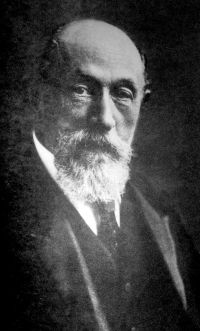
William Lucas Distant

William Lucas Distant

Summary

Portrait of William Lucas Distant William Lucas Distant,  The Zoologist (1900)

“ Does the animal not know for what purpose he constructs it? Was there ever a web-building in which there were not circumstances novel alike to the experience of the individual and to that of the species? Or, when he runs along a thread to capture his prey, or cuts loose a dangerous captive, does he not consciously adapt means to ends, just as much as a man who runs to secure a snared bird, or who builds a 'golden bridge' for a flying enemy? ”
Source: Wikisource

Portrait of William Lucas Distant William Lucas Distant,  The Zoologist (1898)

“ Hans Meyer remarks that "every observer must be struck with the general similarity in colour and partly also in form of the larger African mammals to the prevailing colours and features of the regions they frequent. At a distance it is scarcely possible to tell a Hartebeest at rest from one of the reddish ant-heaps which everywhere abound; the long-legged, long-necked Giraffe might easily pass for a dead mimosa, the Khinoceros for a fallen trunk, the grey-brown Zebra for a clump of grass or thorn scrub. It is only their movements that betray their real character." ”
Source: Wikisource

Portrait of William Lucas Distant William Lucas Distant,  The Zoologist (1901)

“ If we consider the lives of purely nocturnal animals, the fact is impressed on our minds with irresistible force, that the world they see and know must have a totally different aspect to what we realize by the light of day, whilst their living environment is also under different conditions. Except on moonlight nights darkness must reign supreme, whilst a general silence replaces the hum of animal life, and nature ever seems to sleep. ”
Source: Wikisource

Get perspective with Kwize: daily news enlightened by great literature