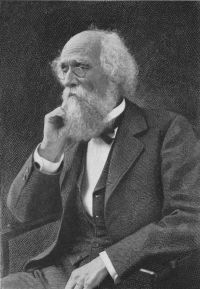
Fauna refers to the collective animal life found in a particular region or period, including a wide range of species and their ecological roles. This concept, essential in zoology and paleontology, has been examined by scholars such as Herbert Spencer, who observed evolutionary changes in animal life over time, and Alfred Russel Wallace, who analyzed patterns in the geographical distribution of species.
Writers like Leo E. Miller emphasized the fragility of nature's balance, while William James focused on the adaptability of animals in their interaction with their environments. The study of fauna, known as faunistics, illustrates the dynamic relationship between biodiversity, habitat, and historical transformation, highlighting its importance in understanding the evolution of life and ecological interdependence.
 Herbert Spencer,
The Principles of Biology — Chapter II.12
(1898)
Herbert Spencer,
The Principles of Biology — Chapter II.12
(1898)