Parasite

Definition and stakes

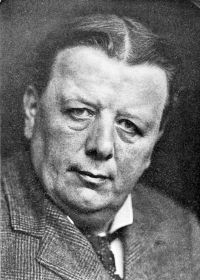
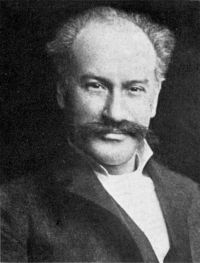
Portrait of Olive Schreiner Olive Schreiner,  Woman and Labour

“ More repulsive than the parasite female herself, because a yet further product of decay, it is yet only the scent of his mother’s boudoir that we smell in his hair. He is like to the bald patches and rotten wool on the back of a scabby sheep; which indeed indicate that, deep beneath the surface, a parasite insect is eating its way into the flesh, but which are not so much the cause of disease, as its final manifestation. ”
Source: Gutenberg

Portrait of Henry Gradle Henry Gradle,  Popular Science Monthly (1883)

“ Having found a suspected parasite in the blood or flesh of a patient, we can not accuse the parasite with certainty of being the cause of the disease, unless we can separate it entirely from the fluids and cells of the diseased body without depriving it of its virulence. In some cases it is not easy, if possible, to cultivate the parasite outside of the body; in other instances it can be readily accomplished. Of course, all such attempts require scrupulous care to prevent contamination from other germs that might accidentally be introduced into the same soil. ”
Source: Wikisource

Portal:Royal Society of Tropical Medicine and Hygiene,  Transactions of the Royal Society of Tropical Medicine and Hygiene (1907)

“ But, of course, it is not possible to experiment on the human being in the case of a parasite which may produce a dangerous disease, nor to introduce it into one of the lower animals, as a human parasite does not necessarily flourish in any of them, so that the production of the disease, experimentally, and the recognition of the parasite afterwards—the third and fourth conditions—are still wanting. ”
Source: Wikisource

Get perspective with Kwize: daily news enlightened by great literature