Medicine

Definition and stakes

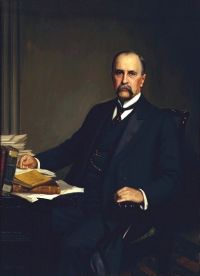
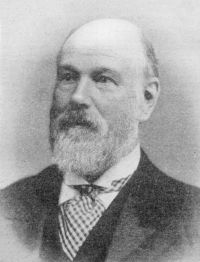
Portrait of Thomas Henry Huxley Thomas Henry Huxley Popular Science Monthly (1874)

Medicine was the foster-mother of chemistry, because it has to do with the preparation of drugs and the detection of poisons; of botany, because it enabled the physician to recognize medicinal herbs; of comparative anatomy and physiology, because the man who studied human anatomy and physiology for purely medical purposes was led to extend his studies to the rest of the animal world.
Source: Wikisource

Joseph Payne and Clifford Allbutt 1911 Encyclopædia Britannica (1911)

MEDICINE.—The science of medicine, as we understand it, has for its province the treatment of disease. The word “medicine” (Lat. medicina: sc. ars, art of healing, from mederi, to heal) may be used very widely, to include Pathology (q.v.) , the theory of the causation of disease, or, very narrowly, to mean only the drug or form of remedy prescribed by the physician—this being more properly the subject of Therapeutics (q.v.)
Source: Wikisource

Portrait of Thomas Jefferson Thomas Jefferson The Writings of Thomas Jefferson…

I have no doubt, that some diseases not yet understood may in time be transferred to the table of those known. But, were I a physician, I would rather leave the transfer to the slow hand of accident, than hasten it by guilty experiments on those who put their lives into my hands. The only sure foundations of medicine are, an intimate knowledge of the human body, and observation on the effects of medicinal substances on that.
Source: Gutenberg

Get perspective with Kwize: daily news enlightened by great literature