Elizabeth Blackwell

Biographical details

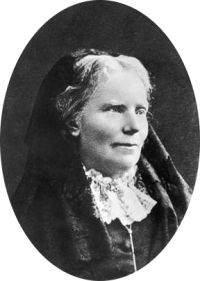
Portrait of Elizabeth Blackwell Elizabeth Blackwell Essays in medical sociology, Volume 1… (1902)

A chaste woman does not think of her own purity; she thinks of the poor girl drudging in cellars, or hurrying at night, waylaid by tempters, to her poor home, or ‘drilled’ in the rich man’s shop; she thinks of her cherished sons with their noble and innocent young manhood exposed to the influence of the corrupt adult. Women’s responsibility for the purity of society commands her to announce the conditions of purity, and unmask with a relentless justice—which is now the truest mercy—those destroyers of national purity, the upholders of a double standard of sexual morality.
Source: Gutenberg

Portrait of Elizabeth Blackwell Elizabeth Blackwell Pioneer Work in Opening the Medical Profession to Women

It was at this time that the suggestion of studying medicine was first presented to me, by a lady friend. This friend finally died of a painful disease, the delicate nature of which made the methods of treatment a constant suffering to her. She once said to me: ‘You are fond of study, have health and leisure; why not study medicine? If I could have been treated by a lady doctor, my worst sufferings would have been spared me.’ But I at once repudiated the suggestion as an impossible one, saying that I hated everything connected with the body, and could not bear the sight of a medical book.
Source: Gutenberg

Portrait of Elizabeth Blackwell Elizabeth Blackwell Essays in medical sociology, Volume 2… (1902)

What chance have these lads of growing into a sense of Christian brotherhood? They are fawned upon from babyhood; initiated at school into the most heathen vices; corrupted by luxury, taught that money can do everything, that rank will be servilely worshipped. How can these poor lads become the large-hearted leaders of a society founded on the Great Master’s teaching of brotherhood? The character of education does not depend only on the more or less wise oversight and arrangements of the schoolmaster, but still more on the constant influences of the life in which the child grows up.
Source: Gutenberg

Get perspective with Kwize: daily news enlightened by great literature