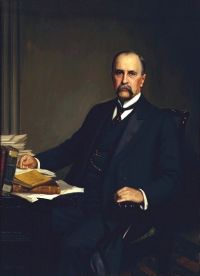
Joseph Payne and Clifford Allbutt

Biographical details

Joseph Payne and Clifford Allbutt 1911 Encyclopædia Britannica (1911)

It was at first very naturally imagined that the simple revival of classical and especially of Greek literature would at once produce the same brilliant results in medicine as in literature and philosophy. The movement of reform started, of necessity, with scholars rather than practising physicians—more precisely with a group of learned men, whom we may be permitted, for the sake of a name, to call the medical humanists, equally enthusiastic in the cause of letters and of medicine.
Source: Wikisource

Joseph Payne and Clifford Allbutt 1911 Encyclopædia Britannica (1911)

It is under this closer occupation with mechanical conditions that surgery to-day is said—not without excuse, but with no more than superficial truth—to have made more progress than medicine. Medicine and surgery are but two aspects of one art; Pasteur shed light on both surgery and medicine, and when Lister, his disciple, penetrated into the secrets of wound fevers and septicaemia, he illuminated surgery and medicine alike, and, in the one sphere as in the other, co-operated in the destruction of the idea of “essential fevers” and of inflammation as an “entity.”
Source: Wikisource

Joseph Payne and Clifford Allbutt 1911 Encyclopædia Britannica (1911)

MEDICINE.—The science of medicine, as we understand it, has for its province the treatment of disease. The word “medicine” (Lat. medicina: sc. ars, art of healing, from mederi, to heal) may be used very widely, to include Pathology (q.v.) , the theory of the causation of disease, or, very narrowly, to mean only the drug or form of remedy prescribed by the physician—this being more properly the subject of Therapeutics (q.v.)
Source: Wikisource

Get perspective with Kwize: daily news enlightened by great literature