Chemistry

Definition and stakes

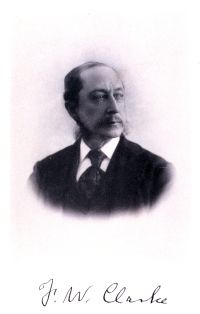
Various,  Popular Science Monthly (1889)

“ Every year some new application of chemical discoveries is made. To whom do we owe the possibility of these applications? My answer is distinctly: We owe it to those chemists who are engaged in investigations in the field of pure science. Everything that tends to the perfection of the science of chemistry is of value in connection with the applications of chemical truths. The most refined investigation on the most abstruse chemical subject may furnish a link in a chain of argument—may be the one thing needed to lead to a most important generalization. ”
Source: Wikisource

Portrait of Herbert Spencer Herbert Spencer,  Essays: Scientific, Political, & Speculative…

“ In brief, though the chemist, in his account of an element or a compound, may refer to certain physical traits associated with its molecular constitution and affinities, he does not by so doing change these into chemical traits. Whatever chemists may put into their books, Chemistry, considered as a science, includes only the phenomena of molecular structures and changes—of compositions and decompositions.12 I contend, then, that Chemistry does not give an account of anything as a concrete whole, in the same way that Biology gives an account of an organism as a concrete whole. ”
Source: Gutenberg

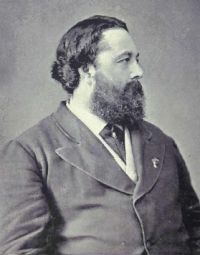
Portrait of Thomas Sterry Hunt Thomas Sterry Hunt,  Popular Science Monthly (1874)

“ AMONG the most significant advances in chemical theory are those relating to the action of heat on bodies. If we define chemistry, as I have been tempted to do, as that science which treats of the relations to one another of the different forms of mineral (i. e., unorganized) matter, and their transformations under the physical agencies of heat, light, and electricity, we shall see how difficult it is, in a sketch like this, to draw the line between physics and chemistry. ”
Source: Wikisource

Get perspective with Kwize: daily news enlightened by great literature