Proton

Definition and stakes

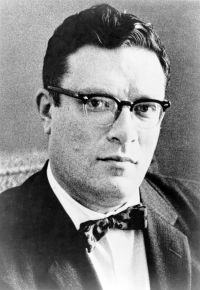
Jr. John W. Campbell,  The Last Evolution

“ Roal's eyes dreamed. In human eyes there was always the expression of thought that machines never show.
"Hydrogen, an atom in space; but a single proton; but a single electron; each indestructible; each mutually destroying. Yet never do they collide. Never in all science, when even electrons bombard atoms with the awful expelling force of the exploding atom behind them, never do they reach the proton, to touch and annihilate it. Yet—the proton is positive and attracts the electron's negative charge.
”
Source: Gutenberg

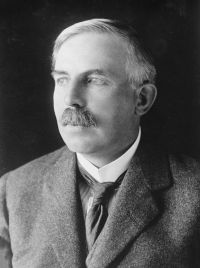
Portrait of Bertrand Russell Bertrand Russell,  An Outline of Philosophy — Chapter 9 (1927)

“ Protons repel each other, and electrons repel each other, but an electron and a proton attract each other. Every atom is a structure consisting of electrons and protons. The hydrogen atom, which is the simplest, consists of one proton with one electron going round it as a planet goes round the sun. The electron may be lost, and the proton left alone; the atom is then positively electrified. But when it has its electron, it is, as a whole, electrically neutral, since the positive electricity of the proton is exactly balanced by the negative electricity of the electron. ”
Source: Wikisource

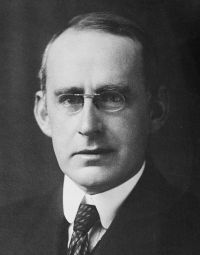
Portrait of Sir Arthur Stanley Eddington Sir Arthur Stanley Eddington,  The nature of the physical world (1928)

“ The proton has 1840 times the mass of the electron, so that nearly all the mass of matter is due to its constituent protons. The proton is not found unadulterated except in hydrogen, which seems to be the most primitive form of matter, its atom consisting of one proton and one electron. In other atoms a number of protons and a lesser number of electrons are cemented together to form a nucleus; the electrons required to make up the balance are scattered like remote satellites of the nucleus, and can even escape from the atom and wander freely through the material. ”
Source: Gutenberg

Get perspective with Kwize: daily news enlightened by great literature