Quantum

Definition and stakes

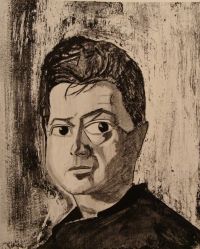
Portrait of Bertrand Russell Bertrand Russell,  The A B C of atoms (1923)

“ But when we come to what goes on in “empty space,” or in the “æther,” we find ourselves in difficulties if we adhere to the quantum theory. Consider what happens when a wave of light is sent out by an atom, with only one quantum of action in each period. The wave spreads out [Pg 136] in all directions, growing fainter as it goes on, like a ripple when a stone is dropped into a pond. The evidence that light consists of waves remains quite unshaken; it is derived from the phenomena of interference and diffraction. ”
Source: Gutenberg

Portrait of Bertrand Russell Bertrand Russell,  The A B C of atoms (1923)

“ It must be confessed that the quantum principle in its modern form is far more astonishing and bewildering than is its older form. It might have seemed odd that energy should exist in little indivisible parcels, but at any rate it was an idea that could be grasped. But in the modern form of the principle, nothing is said, in the first instance, about what is going on at a given moment, or about atoms of energy existing at all times, but only about the total result of a process that takes time. ”
Source: Gutenberg

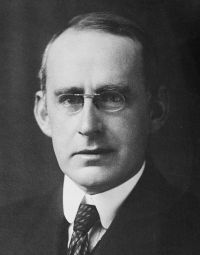
Portrait of Sir Arthur Stanley Eddington Sir Arthur Stanley Eddington,  The nature of the physical world (1928)

“ The quantum theory substitutes the question, Which will it do next? Because it admits only two lower states for the atom to go to. Further, it makes no attempt to find a definite answer, but contents itself with calculating the respective odds on the jumps to State 1 and State 2. The quantum physicist does not fill the atom with gadgets for directing its future behaviour, as the classical physicist would have done; he fills it with gadgets determining the odds on its future behaviour. He studies the art of the bookmaker not of the trainer. ”
Source: Gutenberg

Get perspective with Kwize: daily news enlightened by great literature