AI-generated from sources
The inevitable triumph of abstraction: How physics abandoned mechanical models for the power of pure mathematics
In Brief
- Quantum mechanics achieved flawless predictive power by abandoning classical mechanical models for abstract mathematical formalism based on probability amplitudes.
- The conceptual shift redefined physical law, prioritizing the identification of conserved, calculated numbers rather than describing an underlying physical mechanism.
- The failure of intuitive models led physics to embrace a reality that is functionally perfect but may be permanently 'incomprehensible' (e.g., wave-particle duality).
- Resolving the profound paradoxes inherent in quantum theory now necessitates interdisciplinary contributions from philosophers and scientists to untangle its conceptual meaning.
Main authors

Quantum mechanics stands as one of the most successful scientific theories in history, yet its foundational principles remain profoundly strange [1]. Its predictive power is flawless, accounting for the behavior of particles with perfect accuracy, but it achieves this by describing a reality that defies intuitive comprehension [2]. This paradox has forced a fundamental shift in the very nature of physical inquiry. Where classical physics sought to build tangible, mechanical models of the world, quantum theory operates through abstract mathematical rules, probability amplitudes, and conservation laws expressed as calculable numbers [3, 4]. The success of this abstract approach suggests that the goal of physics may no longer be to create a visualizable, common-sense picture of reality, but rather to formulate the correct equations, regardless of their conceptual strangeness .
This transition represents a significant departure from the historical traditions of science. For centuries, theorists demonstrated a strong predilection for explanations rooted in mechanics, striving to reduce all phenomena to the motion of molecules and atoms [5, 6]. This worldview was built on a trust in observation and the belief that the universe, at its core, functioned like an intricate machine [7]. The discoveries of the early 20th century shattered this confidence. Phenomena such as the dual wave-particle nature of electrons and light created a
and a growing confusion
as the old models proved inadequate [8]. Physicists found themselves confronting a choice: either cling to familiar but failing mechanical analogies or embrace a new, non-intuitive mathematical framework that, despite its strangeness, actually worked [9]. This article explores this pivotal abandonment of mechanical models, tracing the rise of mathematical abstraction and the profound consequences of accepting a theory that is functionally perfect but perhaps permanently incomprehensible [10].
The breakdown of the mechanical worldview
The classical physicist's toolkit was one of intuition and analogy. The universe was conceived as a grand mechanism, and the goal was to uncover its workings, much like a watchmaker reverse-engineering a complex clock . This approach relied on the idea that physical phenomena were reversible and could be explained by the interactions of matter in motion, a perspective that found its philosophical roots in the difficulty of conceiving of actions without direct impact or pressure [11]. Even as physics became more sophisticated, this bias toward mechanical thinking persisted, shaping the very questions scientists asked and the kinds of answers they deemed acceptable .
However, as investigation pushed into the subatomic realm, this mechanical worldview began to fracture. The behavior of particles and energy at the quantum scale refused to conform to classical expectations . The discovery that electrons could behave as both particles and waves depending on how they were observed was a clear sign that simple analogies were failing . This created a conceptual crisis, as the physical world no longer seemed to operate according to principles that could be easily visualized or understood through sensory experience [12]. Some even foresaw the inevitable end of any self-consistent mechanics, arguing that the act of observation itself fundamentally intrudes upon the inorganic world being studied [13].
The failure of old models was not merely a matter of detail; it was a failure of the entire explanatory framework. The new physics was filled with phenomena, such as quantum jumps and probabilistic outcomes, that were not just non-mechanical but anti-mechanical [14, 15]. Attempts to patch the old system, for instance by superposing quantum rules onto classical models of the atom, were ultimately just temporary fixes that highlighted the deep disconnect between the two realities [16]. A physical principle is only useful as long as it can successfully predict new phenomena, and by this standard, the purely mechanical view had reached its limit . A fundamentally new approach was required—one that was willing to sacrifice intuitive understanding for predictive power.
The triumph of mathematical formalism
The resolution to the growing confusion in physics came not from a better mechanical model, but from the development of a new mathematical language . This shift was championed by figures like Paul Dirac, who discovered fundamental laws by guessing the correct equation, and Richard Feynman, who observed that the greatest discoveries consistently abstract away from the initial, helpful models . This marked a profound change in methodology: the search for physical truth became a search for the right mathematical structure, even if that structure had no simple real-world counterpart.
This new formalism redefined what constitutes a 'law of nature.' Instead of a description of a mechanism, a physical law became a statement about a quantity that remains constant through change—a conserved number that can be precisely calculated . Symmetries in nature, such as the fact that an experiment's outcome is independent of its location in space, could be mathematically linked to conservation laws, like the conservation of momentum, through the framework of quantum mechanics [17]. While some physical laws could be stated simply, the fundamental ones required the rigor and abstraction of mathematics to be expressed at all . This mathematical precision became the new standard for explanation.
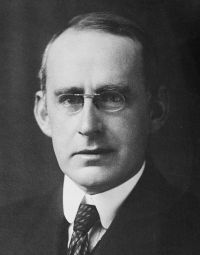
This triumph of abstraction fundamentally altered the objective of physical inquiry. As described by Sir Arthur Stanley Eddington, the quantum physicist is no longer a 'trainer' attempting to direct the behavior of a system, but a 'bookmaker' calculating the odds of different potential outcomes . The theory does not try to explain why an electron will jump to a specific orbit, but rather calculates the respective probabilities of it jumping to any of the available orbits . This approach demands a radical shift in thinking, a 'quantum jump' away from old assumptions [18]. To resolve the theory's paradoxes, it becomes necessary to focus solely on what is observed and, as Norman Robert Campbell suggested for relativity, to 'dismiss utterly from his mind the conception of reality' that lies underneath [19].
Living with an incomprehensible reality
By prioritizing mathematical consistency over intuitive clarity, quantum mechanics created a conceptual chasm between how the world works and how we can speak about it. This leads to descriptions of quantum states, such as Schrödinger's cat being simultaneously alive and dead, that can be dismissed as 'gibberish' from a logical standpoint [20]. The theory is a black box that provides correct outputs but whose internal workings remain opaque, prompting a host of unanswered questions about the underlying mechanisms of events like electron transitions . There is no clear picture of what is 'really' happening.
This conceptual vacuum has created a new space for interdisciplinary work. The persistent philosophical problems at the heart of quantum mechanics have invited contributions from thinkers outside of physics, who collaborate to untangle its meaning [21, 22]. This represents a notable turn, as historically, philosophers with a 'hazy' understanding of mechanics were often seen as ill-equipped to comment on physics [23]. Today, however, the conceptual challenges are so profound that the collaboration of many different kinds of thinkers is seen as a productive path forward [24].
Ultimately, the quantum revolution has forced science to confront its own limits and to distinguish between knowing and comprehending [25]. We know that the mathematical framework of quantum mechanics is correct because it has been verified experimentally to an extraordinary degree . Yet we may never fully comprehend it in the way we comprehend a simple machine. Physics has led us to a point where we stand 'face to face with the Incomprehensible' . The theory works, but the intuitive, tangible reality it was once meant to describe has receded from view, replaced by a set of abstract and startlingly successful rules.
The development of quantum mechanics marks a clear endpoint for the classical, mechanical worldview. The historical preference for intuitive models that could be visualized and manipulated gave way to a reliance on abstract mathematical equations that predict phenomena with perfect accuracy but offer little in the way of common-sense explanation . This shift was not a choice but a necessity, driven by experimental results that simply could not be contained within the old frameworks . The result is a theory that triumphs in its application while remaining profoundly unsettling in its implications .
Physics has thus redefined its own mission. The goal is no longer to construct a one-to-one map of reality, but to find the mathematical principles that govern it, even if those principles are irreducibly strange . In accepting quantum mechanics, scientists have learned to operate with what is known without demanding that it also be fully comprehended . They have traded the comfort of a clockwork universe for the power of a probabilistic one, embracing a reality that works according to its own alien logic and stands as a permanent testament to the limits of human intuition .