Electron

Definition and stakes

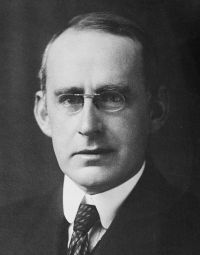
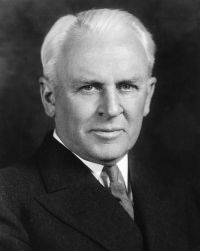
Portrait of Robert Andrews Millikan Robert Andrews Millikan,  The electron, its isolation and measurement and the determination of some of its properties (1924)

“ The terms “electron” and “positive electron” would then be used altogether conveniently precisely as are the terms “man” and “woman.” Indeed, the most authoritative writers—Thomson, Rutherford, Campbell, Richardson, etc.—have in fact retained the original significance of the word “electron” instead of using it to denote solely the free negative electron, the mass of which is of that of the hydrogen atom. ”
Source: Gutenberg

Portrait of Bertrand Russell Bertrand Russell,  The A B C of atoms (1923)

“ If a disturbance of this sort could be discovered which would move and change as the electron does, and have the same amount of energy as the electron has, and have periodic changes of the same frequency as those of the electron, physics could regard it as what an electron really is without contradicting anything that present-day physics means to assert. And of course it is equally possible that a hydrogen nucleus may come to be explained in a similar way. ”
Source: Gutenberg

Charles R. Gibson,  The Autobiography of an Electron

“ To make the electron's story as realistic as possible, it has been necessary to give the imaginary electron perfect freedom of knowledge concerning itself and its surroundings. In our schooldays we had to write the autobiographies of steel pens, and such-like, but these inanimate things had to be endowed with powers of thought, feeling, and desire. It is very important, however, to remember that an electron is a particle of negative electricity—a real existing thing. ”
Source: Gutenberg

Get perspective with Kwize: daily news enlightened by great literature