Hendrik Antoon Lorentz, a Dutch physicist (1853–1928), was a key figure in theoretical physics, celebrated for his contributions to electromagnetism and the foundations of relativity. His Lorentz transformations and the Lorentz force became fundamental elements of modern physics, while his explanation of the Zeeman effect earned him a Nobel Prize.
Lorentz’s research connected classical electromagnetism with relativity, shaping Einstein’s theory through ideas such as length contraction and time dilation. His writings, such as The Theory of Electrons, examined light propagation and aether theories, highlighting the relationship between matter and electromagnetic fields. Lorentz’s legacy resides in his precise mathematical formulations, which established the basis for 20th-century physics, merging classical and quantum approaches.
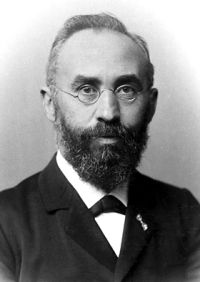 Hendrik Lorentz,
The Einstein Theory of Relativity
(1920)
Hendrik Lorentz,
The Einstein Theory of Relativity
(1920)
