Length contraction

Definition and stakes

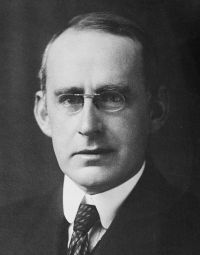
Portrait of Sir Arthur Stanley Eddington Sir Arthur Stanley Eddington,  The nature of the physical world (1928)

“ At 1000 miles a second the contraction is not large enough to be appreciable in ordinary affairs; but it is quite large enough to be appreciable in measurements of scientific or even of engineering accuracy. One of the most fundamental procedures in physics is to measure lengths with a scale moved about in any way. Imagine the consternation of the physicists on this planet when they learn that they have made a mistake in supposing that their scale is a constant measure of length. ”
Source: Gutenberg

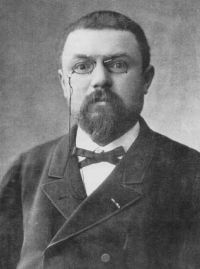
Portrait of Henri Poincaré Henri Poincaré,  The Foundations of Science (1913)

“ Unhappily, that does not suffice, and complementary hypotheses are necessary; it is necessary to admit that bodies in motion undergo a uniform contraction in the sense of the motion. One of the diameters of the earth, for example, is shrunk by one two-hundred-millionth in consequence of our planet's motion, while the other diameter retains its normal length. ”
Source: Wikisource

Portrait of Sir Arthur Stanley Eddington Sir Arthur Stanley Eddington,  The nature of the physical world (1928)

“ Consequences of the Contraction. This result alone, although it may not quite lead you to the theory of relativity, ought to make you uneasy about classical physics. The physicist when he wishes to measure a length—and he cannot get far in any experiment without measuring a length—takes a scale and turns it in the direction needed. It never occurred to him that in spite of all precautions the scale would change length when he did this; but unless the earth happens to be at rest a change must occur. ”
Source: Gutenberg

Get perspective with Kwize: daily news enlightened by great literature