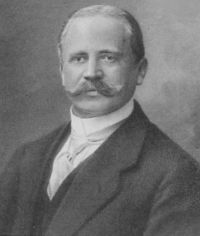
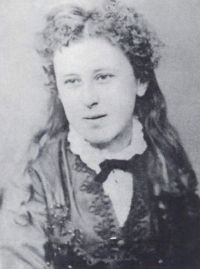
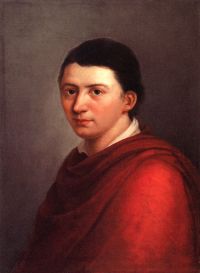
The mode, in statistics, is the value that occurs most frequently in a dataset, functioning as a measure of central tendency. While it is primarily a mathematical concept, writers such as Oscar Wilde and Ralph Waldo Emerson examined "mode" within literary and philosophical frameworks, considering it as a means of artistic expression, cultural development, or intellectual orientation.
Denman W. Ross associated it with aesthetic principles like harmony and rhythm, while Friedrich Schiller connected it to the unity of form and emotion. These diverse perspectives demonstrate how the term goes beyond numerical analysis, illustrating broader human patterns in thought, art, and society.
 John Seely Hart,
The Mode
(1852)
John Seely Hart,
The Mode
(1852)