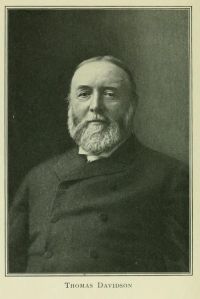
The concept of "round" refers to a shape in which every point on the edge is equally distant from the center—a geometric form that carries deep literary and symbolic significance. Writers have examined this shape from various perspectives: Joseph Conrad metaphorically contrasts a "square peg" with a "round hole," while John Stuart Mill analyzes the linguistic distinctions between "round" and "a round object.
" Thomas Davidson investigates its practical uses, describing tools for creating circular shapes, and Arabella B. Buckley employs it to explain scientific compression. Lydia Maria Child simplifies the idea for educational purposes, connecting roundness with spatial understanding, and Thomas Wallace Knox references the Earth’s "rotundity" to anchor abstract ideas. These differing viewpoints demonstrate how "round" connects geometry, language, and metaphor, reflecting both the physical world and human interpretation.
 Joseph Conrad,
The Secret Agent
(1907)
Joseph Conrad,
The Secret Agent
(1907)