Summary

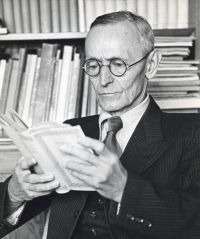
Portrait of Hermann Hesse Hermann Hesse Siddhartha: A Poem of India

Life was a torment.
Siddhartha had but one objective: to empty himself, to empty himself of thirst, of desire, of dreams, empty himself of joy and sorrow. To die away from himself, to no longer be himself, to find peace by emptying his own heart, to stand open to the miracle by alienating his own thoughts, that was his objective. Once the whole of his self had been overcome and destroyed, once every need and every drive of his heart was silent, that was when the ultimate had to wake, the deepest part of his being, that which is no longer the self, the great secret.
Source: Gutenberg

Portrait of Hermann Hesse Hermann Hesse Siddhartha: A Poem of India

This Siddhartha is a wonderful man, these are wonderful thoughts he expresses, his teaching sounds foolish. The pure teachings of the noble one are different, they are clearer, purer, easier to understand, and contain nothing odd or foolish or ridiculous. But Siddhartha’s hands and feet seem different from his thoughts. His eyes, his brow, his breath, his smile, his greeting, his walk, they all seem different. Since our noble one, Gotama, went into Nirvana I have never met any one about whom I have felt, ‘This is a holy man.’ He alone, this Siddhartha, is the only one I have found.
Source: Gutenberg

Portrait of Hermann Hesse Hermann Hesse Siddhartha: A Poem of India

Siddhartha walked more slowly as he pondered and then, gripped by these thoughts, came to a stop. And at that moment a new thought sprang out from them: There is a reason why I know nothing about myself, a cause for Siddhartha remaining so strange and unfamiliar to me, just one cause; I was in fear of myself, I was in flight from myself! I sought Atman, I sought Brahman, I had resolved to break my self apart, to flay it apart so that in its innermost, least known part I could find the kernel within all shells, Atman, life, the divine, the ultimate.
Source: Gutenberg

Get perspective with Kwize: daily news enlightened by great literature