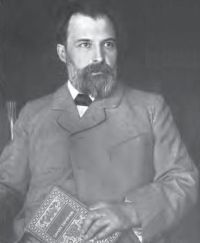
Paul Carus

Paul Carus

Summary

Portrait of Paul Carus Paul Carus Gospel of Buddha (1917)

When the Blessed One had spoken thus, Simha, the general, said: "Glorious Lord, glorious Lord! Thou hast revealed the truth. Great is the doctrine of the Blessed One. Thou, indeed, art the Buddha, the Tathāgata, the Holy One. Thou art the teacher of mankind. Thou showest us the road of salvation, for this indeed is true deliverance. He who follows thee will not miss the light to enlighten his path. He will find blessedness and peace. I take my refuge, Lord, in the Blessed One, and in his doctrine, and in his brotherhood.
Source: Wikisource

Portrait of Paul Carus Paul Carus Gospel of Buddha (1917)

The consciousness of self dims the eyes of the mind and hides the truth. It is the origin of error, it is the source of illusion, it is the germ of evil.7
Self begets selfishness. There is no evil but what flows from self. There is no wrong but what is done by the assertion of self.8
Self is the beginning of all hatred, of iniquity and slander, of impudence and indecency, of theft and robbery, of oppression and bloodshed. Self is Māra, the tempter, the evil-doer, the creator of mischief.9
Self entices with pleasures. Self promises a fairy's paradise.
Source: Wikisource

Portrait of Paul Carus Paul Carus Gospel of Buddha (1917)

Than the Blessed One continued: "It" thou hast faith, Ānanda, in the wisdom of the Tathāgata, why, then, Ănanda, dost thou trouble the Tathāgata even until the third time? Have I not formerly declared to you that it is in the very nature of all compound things that they must be dissolved again. We must separate ourselves from all things near and dear to us, and must leave them. How then, Ānanda, can it be possible for me to remain, since everything that is born, or brought into being, and organized, contains within itself the inherent necessity of dissolution?
Source: Wikisource

Get perspective with Kwize: daily news enlightened by great literature