Summary

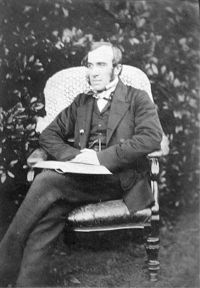
Portrait of Sir Monier Monier-Williams Sir Monier Monier-Williams Buddhism, in Its Connexion with Brahmanism and Hinduism…

What, then, was the light that broke upon the Buddha? What was this enlightenment which has been so much written about and extolled? All that he claimed to have discovered was the origin of suffering and the remedy of suffering. All the light of knowledge to which he attained came to this:—that 545 suffering arises from indulging desires, especially the desire for continuity of life; that suffering is inseparable from life; that all life is suffering; and that suffering is to be got rid of by the suppression of desires, and by the extinction of personal existence.
Source: Gutenberg

Portrait of Sir Monier Monier-Williams Sir Monier Monier-Williams Buddhism, in Its Connexion with Brahmanism and Hinduism…

Fitly, indeed, do the rags worn by the monks of true Buddhism symbolize the miserable patchwork of its own self-righteousness.
Not that Christianity ignores the necessity for good works; on the contrary, no other system insists on a lofty morality so strongly; but never as the meritorious instrument of salvation [292] —only as a thank-offering, only as the outcome and evidence of faith.
Lastly, we must advert again to the most momentous—the most essential of all the distinctions which separate Christianity from Buddhism. Christianity regards personal life as the most sacred of all possessions.
Source: Gutenberg

Portrait of Sir Monier Monier-Williams Sir Monier Monier-Williams Buddhism, in Its Connexion with Brahmanism and Hinduism…

Buddhism, on the other hand, says:—Avoid married life; shun it as if it were ‘a burning pit of live coals’ (p. 88) ; or, having entered on it, abandon wife, children, and home, and go about as celibate monks, engaging in nothing but in meditation and recitation of the Buddha’s Law—that is to say—if you aim at the highest degree of sanctification.
And then comes the important contrast that in the one system we have a teaching gratifying to the pride of man, and flattering to his intellect; while in the other we have a teaching humbling to his pride, and distasteful to his intellect.
Source: Gutenberg

Get perspective with Kwize: daily news enlightened by great literature