Summary

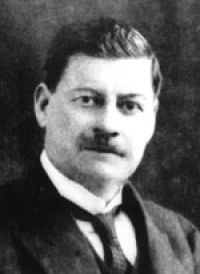
Portrait of Charles Eliot Charles Eliot Hinduism and Buddhism, An Historical Sketch…

But on entering the platform one feels that one has suddenly passed from this life into another and different world. It is not perhaps a very elevated world; certainly not the final repose of the just or the steps of the throne of God, but it is as if you were walking in the bazaars of Paradise—one of those Buddhist Paradises where the souls of the moderately pure find temporary rest from the whirl of transmigration, where the very lotus flowers are golden and the leaves of the trees are golden bells that tinkle in the perfumed breeze.
Source: Gutenberg

Portrait of Charles Eliot Charles Eliot Hinduism and Buddhism, An Historical Sketch…

In Upper Burma there are not so many large images but as one approaches Mandalay the pagodas add more and more to the landscape. Many are golden and the rest are mostly white and conspicuous. They crown the hills and punctuate the windings of the valleys. Perhaps Burmese art and nature are seen at their best near Sagaing on the bank of the Irrawaddy, a mighty flood of yellow water, sweeping down smooth and steady, but here and there showing whirlpools that look like molten metal.
Source: Gutenberg

Portrait of Charles Eliot Charles Eliot Hinduism and Buddhism, An Historical Sketch…

The buildings of Hindus and Burmans are as different as their characters. When a Hindu temple is imposing it is usually because of its bulk and mystery, whereas these buildings are lighthearted and fairy-like: heaps of red and yellow fruit with twining leaves and tendrils that have grown by magic. Nor is there much resemblance to Japanese architecture. There also, lacquer and gold are employed to an unusual extent but the flourishes, horns and finials which in Burma spring from every corner and projection are wanting and both Japanese and Chinese artists are more sparing and reticent.
Source: Gutenberg

Get perspective with Kwize: daily news enlightened by great literature