Hangzhou

Definition and stakes

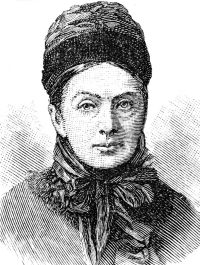
Portrait of Isabella L. Bird Isabella L. Bird Chinese pictures (1900)

THE WEST GATE OF
KIALING FU
98 THE WEST GATE OF
HANGCHOW. One of the friendliest cities to the foreigner. The cry of “Foreign devil!” is never heard within its walls. The people have had time to learn how much they profit by the trade the foreigner brings, and by the efforts of the missionaries to ameliorate the condition of the very poor by their hospitals. Hangchow is a great centre of the silk trade. The whole city, which has a population of 700,000, and the principal street of which is five miles long, is surrounded by a wall faced with hewn stone, such as is shown in the photograph.
Source: Gutenberg

1911 Encyclopædia Britannica (1911)

There is a Roman Catholic mission in Hangchow, and the Church Missionary Society, the American Presbyterians, and the Baptists have stations. The local dialect differs from the Mandarin mainly in pronunciation. The population, which is remarkable for gaiety of clothing, was formerly reckoned at 2,000,000, but is now variously estimated at 300,000, 400,000 or 800,000. Hang-chow-fu was declared open to foreign trade in 1896, in pursuance of the Japanese treaty of Shimonoseki. It is connected with Shanghai by inland canal, which is navigable for boats drawing up to 4 ft.
Source: Wikisource

Lawrence Dundas A wandering student in the Far East… (1908)

Shanghai is, in fact, an independent republic with a government of its own, which treats all other authorities with whom it is brought into contact—Chinese provincial officials, foreign consuls, the legations at Peking—as so many external bodies to be met and dealt with upon terms of equality.
That it flourishes amazingly is a fact beyond dispute. Prosperity—arrogance the Chinese of to-day, flushed with his new-born spirit of nationality, would probably say—stares you in the face as you steam up the Whang-poo river lined with vast piles of modern architecture.
Source: Wikisource

Get perspective with Kwize: daily news enlightened by great literature