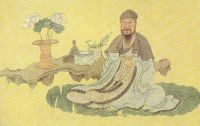
Song dynasty

Definition and stakes

W. A. P. Martin The Awakening of China

So deep an impression has this historical generalisation made on the public mind that if the empire were now to be divided between foreign nations, as it has been more than once, the people would confidently expect it to be reintegrated under rulers of their own race.
The undivided Sung dynasty held sway from 960 to 1127; that of the southern Sungs from 1127 to 1280. The founder of the house was Chao-kwang-yun, an able leader of soldiers and an astute politician. So popular was he with his troops that they called him to the throne by acclamation.
Source: Gutenberg

Portrait of Herbert Allen Giles Herbert Allen Giles China and the Manchus

In 1126, the Sung capital, the modern Kʽai-fêng Fu in Honan, was twice besieged: on the first occasion for thirty-three days, when a heavy ransom was exacted and some territory was ceded; on the second occasion for forty days, when it fell, and was given up to pillage. In 1127, the feeble Chinese Emperor was seized and carried off, and by 1129 the whole of China north of the Yang-tsze was in the hands of the Nü-chêns. The younger brother of the banished Emperor was proclaimed by the Chinese at Nanking, and managed to set up what is known as the southern Sung dynasty
Source: Gutenberg

Portrait of Bai Juyi Bai Juyi The Song of Everlasting Regret

The regret of our parting will last forever and never end. Notes
↑ Han dynasty is a disguise to avoid literary inquisition. It is actually referencing to Tang dynasty. The Emperor Xuanzong of Tang, whose relationship to Yang Guifei brought to mind the Emperor Wu of Han's relationship to his concubine, Consort Li. Bai Juyi would have considered it unpoetic to refer to his subject directly.↑ Bai Juyi is referring to the story of how Emperor Wu of Han met Consort Li.
Source: Wikisource

Get perspective with Kwize: daily news enlightened by great literature