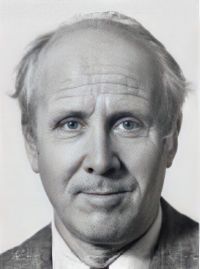
Wolfram Eberhard

Biographical details

Portrait of Wolfram Eberhard Wolfram Eberhard A History of China

We have no desire to show that China's history is the most glorious or her civilization the oldest in the world. A claim to the longest history does not establish the greatness of a civilization; the importance of a civilization becomes apparent in its achievements. A thousand years ago China's civilization towered over those of the peoples of Europe. Today the West is leading; tomorrow China may lead again. We need to realize how China became what she is, and to note the paths pursued by the Chinese in human thought and action.
Source: Gutenberg

Portrait of Wolfram Eberhard Wolfram Eberhard A History of China

The best formula for a revolution seems to involve turning youth against its elders, rather than turning one class against another. Not all societies have a class system so clear-cut that class antagonism is effective. On the other hand, Chinese youth, in its opposition to the "establishment," to conservatism, to traditional religion, to blind emulation of Western customs and institutions, to the traditional family structure and the position of women, had hopes that communism would eradicate the specific "evil" which each individual wanted abolished.
Source: Gutenberg

Portrait of Wolfram Eberhard Wolfram Eberhard A history of China., [3d ed. rev…

There were continual risings, which culminated in A.D. 18 in a great popular insurrection, a genuine revolutionary rising of the peasants, whose distress had grown beyond bearing through Wang Mang's ill-judged measures. The rebels called themselves "Red Eyebrows"; they had painted their eyebrows red by way of badge and in order to bind their members indissolubly to their movement. The nucleus of this rising was a secret society. Such secret societies, usually are harmless, but may, in emergency situations, become an immensely effective instrument in the hands of the rural population.
Source: Gutenberg

Get perspective with Kwize: daily news enlightened by great literature