Summary

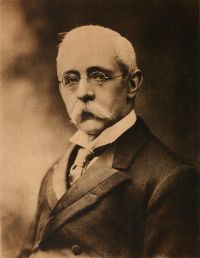
Portrait of Herbert Allen Giles Herbert Allen Giles The Civilization of China — Chapter IV—A.D. 220-1200

Then she takes out the old keepsake, tokens of undying love, A gold hairpin, an enamel brooch, and bids the magician carry these back. One half of the hairpin she keeps, and one half of the enamel brooch, Breaking with her hands the yellow gold, and dividing the enamel in two. "Tell him," she said, "to be firm of heart, as this gold and enamel, And then in heaven or on earth below we two may meet once more." The magnificent House of T'ang was succeeded by five insignificant dynasties, the duration of all of which was crowded into about half a century.
Source: Wikisource

Portrait of Herbert Allen Giles Herbert Allen Giles The Civilization of China — Chapter IV—A.D. 220-1200

The dress of the people has indeed undergone several variations, but the ploughs and hoes, the water-wheels and well-sweeps, the tools of the artisans, mud huts, carts, junks, chairs, tables, chopsticks, etc., which we still see in China, are probably very much those of two thousand years ago. Mencius, of the third century B.C., observed that written characters had the same form, and axle-trees the same breadth, all over the empire; and to this day an unaltering uniformity is one of the chief characteristics of the Chinese people in every department of life.
Source: Wikisource

Portrait of Herbert Allen Giles Herbert Allen Giles The Civilization of China — Chapter IV—A.D. 220-1200

In the year A.D. 618 the House of T'ang entered upon its glorious course of three centuries in duration. Under a strong but dissolute ruler immediately preceding, China had once more become a united empire, undivided against itself; and although wars and rebellions were not wanting to disturb the even tenor of its way, the general picture presented to us under the new dynasty of the T'angs is one of national peace, prosperity, and progress.
Source: Wikisource

Get perspective with Kwize: daily news enlightened by great literature